
Project
Bespoke Windows & Interior Reinstatement
Bespoke windows across three rooms, with plastering, electrical work and decoration brought together as one refurbishment scope.

Plastering & Decorating London
Preparation and finishes
Plastering and decorating in a private home often follows other intrusive work: roof leaks, plumbing access, electrical changes, joinery adjustments, window works or broader refurbishment.
A good finish depends on what is beneath the surface. Cracking, staining, blown plaster, damp marks, old coatings, movement and previous repairs should be understood before final decoration is agreed.
For planned residential work, preparation, protection and communication matter as much as the finish coat. Expectations should be agreed against substrate condition, drying, access, room use and the sequence of preceding trades.
At enquiry stage, ER Group London reviews the rooms affected, photographs, the reason for the work, known staining or cracking, any finish specification and the trades that need to complete first.
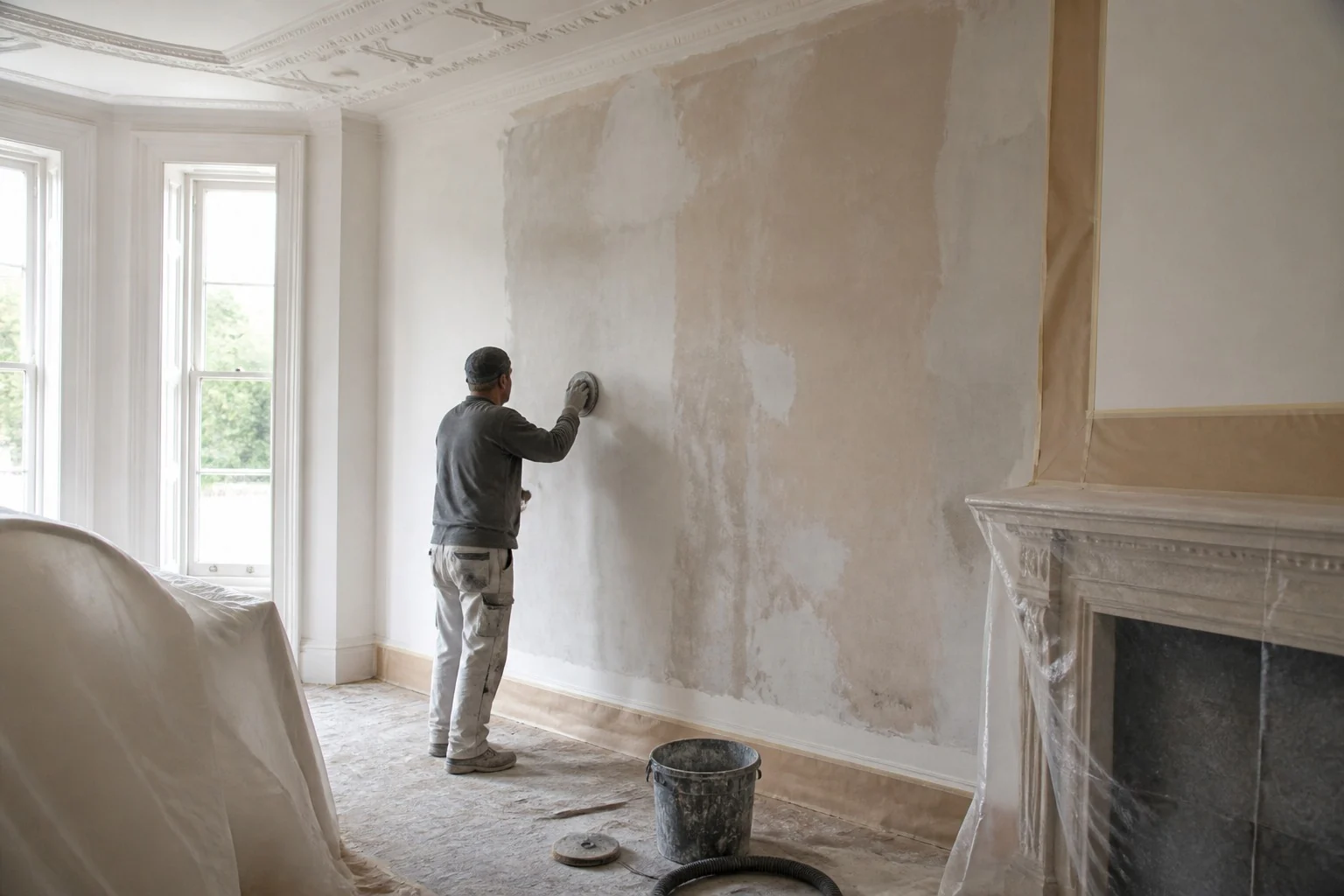
Typical refurbishment finishes
Suitable work includes making good after other trades, preparing older or damaged surfaces and final decoration where protection and finish quality matter.
Plastering and decorating after plumbing, electrical, roofing, joinery or window work has opened walls, ceilings or boxed areas.
Rooms where existing fabric, mouldings, older substrates, previous repairs or high-value finishes need careful handling.
Work requiring dust control, route protection and clear sequencing around household use.
Colour, sheen, material and detail decisions that need to align with client, architect or designer intent.
Decoration following water ingress where the source, drying and substrate condition should be understood first.
Final finish work after other trades have completed, surfaces are ready and access requirements are clear.
Assess before decorating
Cracking, staining, blown plaster, moisture and previous repairs should be understood before decorative work is used to cover the surface.
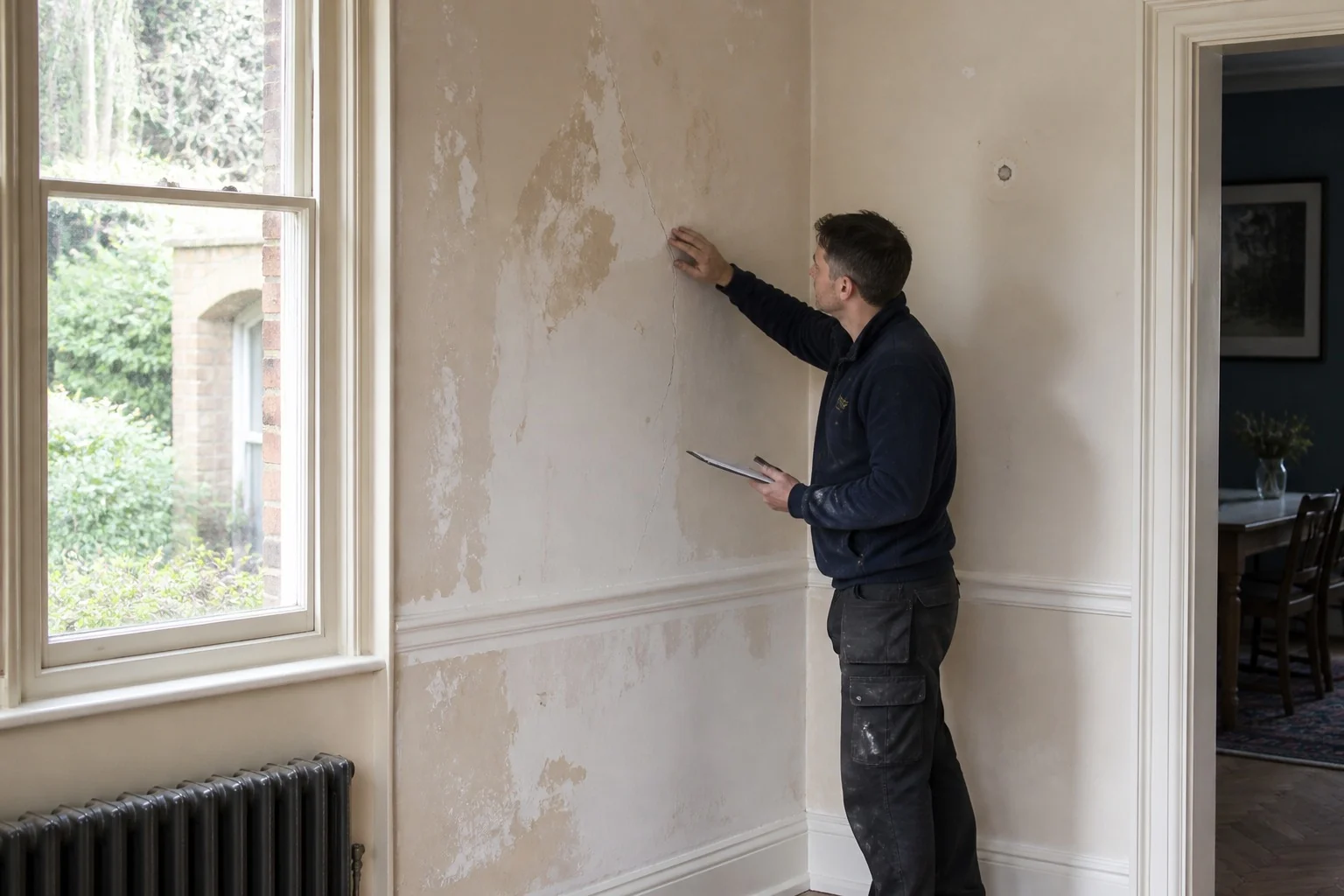
Cracks, blown plaster, staining or uneven surfaces should be reviewed before finish coats are discussed. Some defects may require drying time, further investigation or other trade work before plastering or decorating is sensible.
Preparation may include local repairs, filling, sanding, sealing, priming or skim work depending on substrate and specification. The scope should make clear what level of preparation is included before final decoration proceeds.

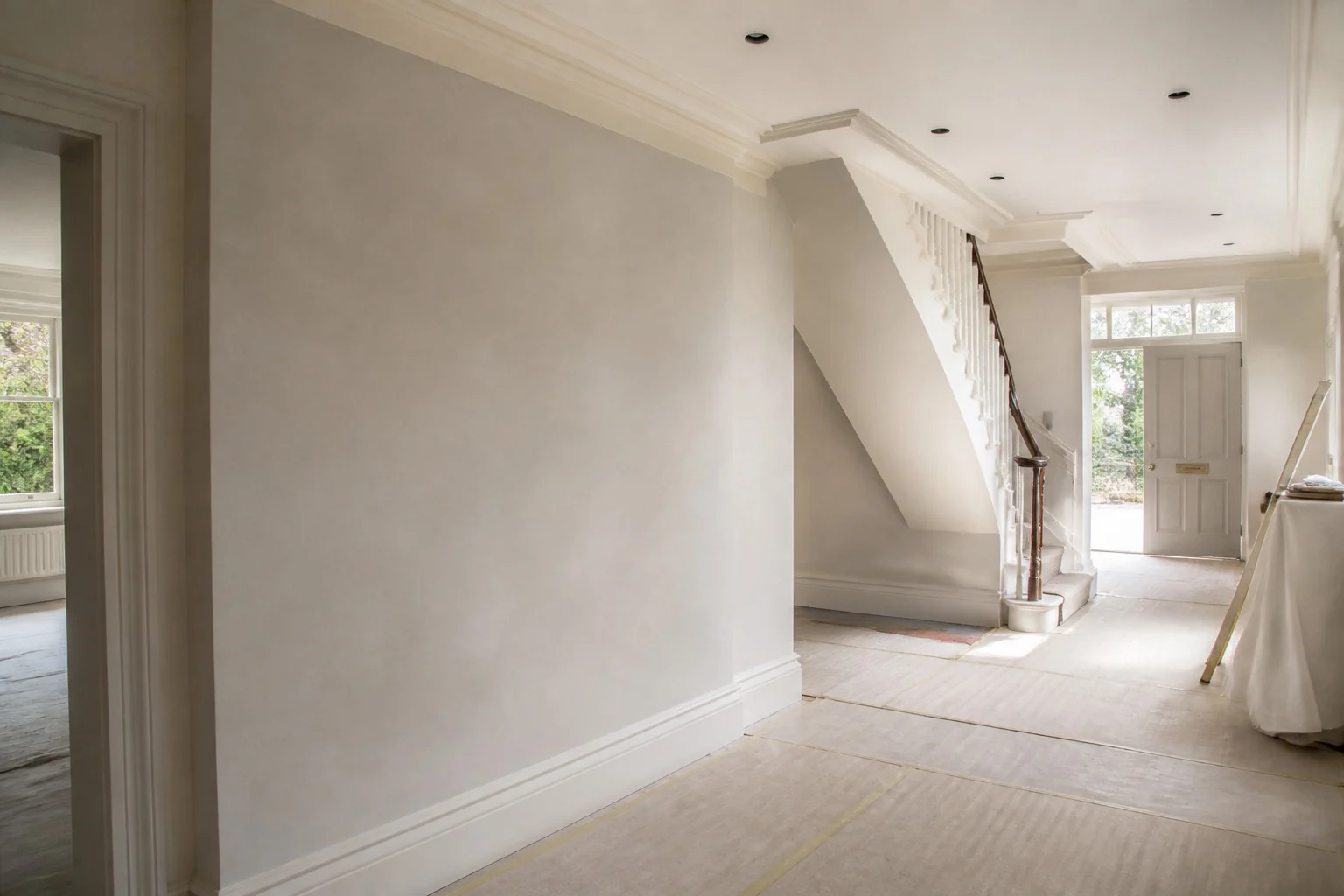
Electrical, plumbing, carpentry and window or door work should be considered before decoration closes the surface. A tidy final finish depends on resolving holes, chases, fixtures and access points in the correct order.
Finish limitations
The expected finish depends on substrate stability, moisture, drying time, old coatings and the agreed level of preparation.
Underlying movement, damp or substrate condition can affect the result and should be addressed before final decoration is agreed.
Water damage, new plaster and repair materials may need suitable drying or preparation before decoration.
Furniture, floors, fitted joinery and access routes are considered before work starts.
The property, surface condition, access, proposed finish and wider refurbishment context should be reviewed before the service is confirmed.
Older buildings may contain previous coatings or finishes that need careful assessment before sanding, stripping or repainting.
A decorative finish should be agreed against the preparation level, surface condition and normal tolerances of the existing room.
Edges and junctions
Corners, cornices, skirting, architraves, window reveals and fitted joinery all influence how the completed room reads.
Ceiling lines, skirting, architraves, cornices, window reveals and fitted joinery all affect how a decorated room reads. These junctions should be reviewed before preparation and finish coats begin.
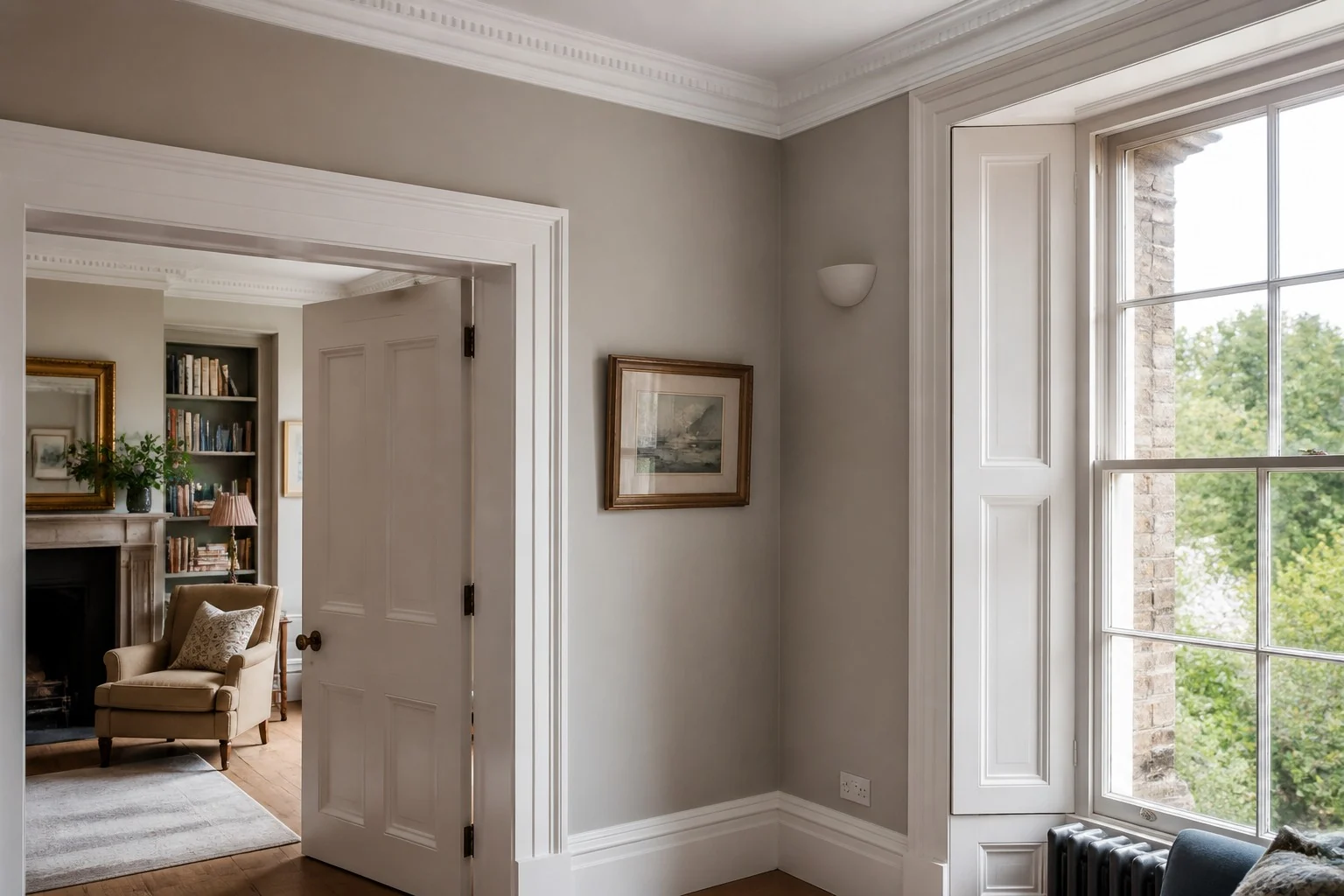
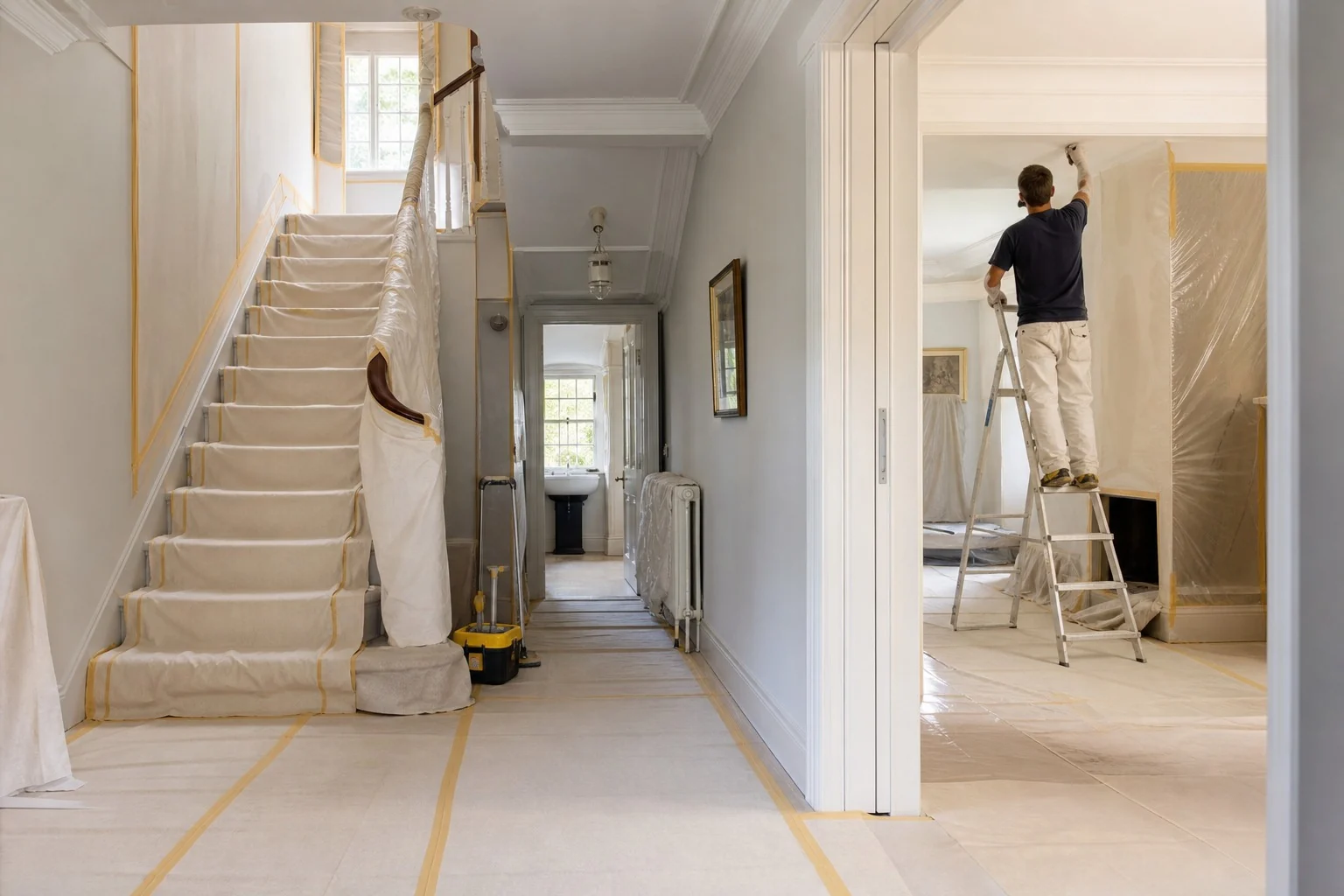
Dust, wet materials, drying times and access through the home need practical handling. The scope should explain which rooms are affected and what needs to be moved, protected or kept accessible.
Working through the finish sequence
Dust control, protection, drying time, trade sequencing and final checks are managed around the occupied or carefully finished property.
Rooms, surfaces, access routes, colour or finish information and preceding trade work are reviewed before start.
Floors, joinery, furniture and adjoining rooms are considered before sanding, plastering or decoration.
Preparation findings and any changed assumptions are communicated before finish coats are applied.
Edges, reveals, trims, fixtures and adjoining surfaces are considered as part of the final room finish.
Drying periods, re-entry expectations and room access should be made clear during the work.
Completed areas, drying considerations and any remaining observations are explained clearly.
Project
Bespoke windows across three rooms, with plastering, electrical work and decoration brought together as one refurbishment scope.
Plastering and decorating FAQs
Next Steps
Share the rooms affected, photographs, known substrate issues, required finish and any other trade work that needs to happen first.