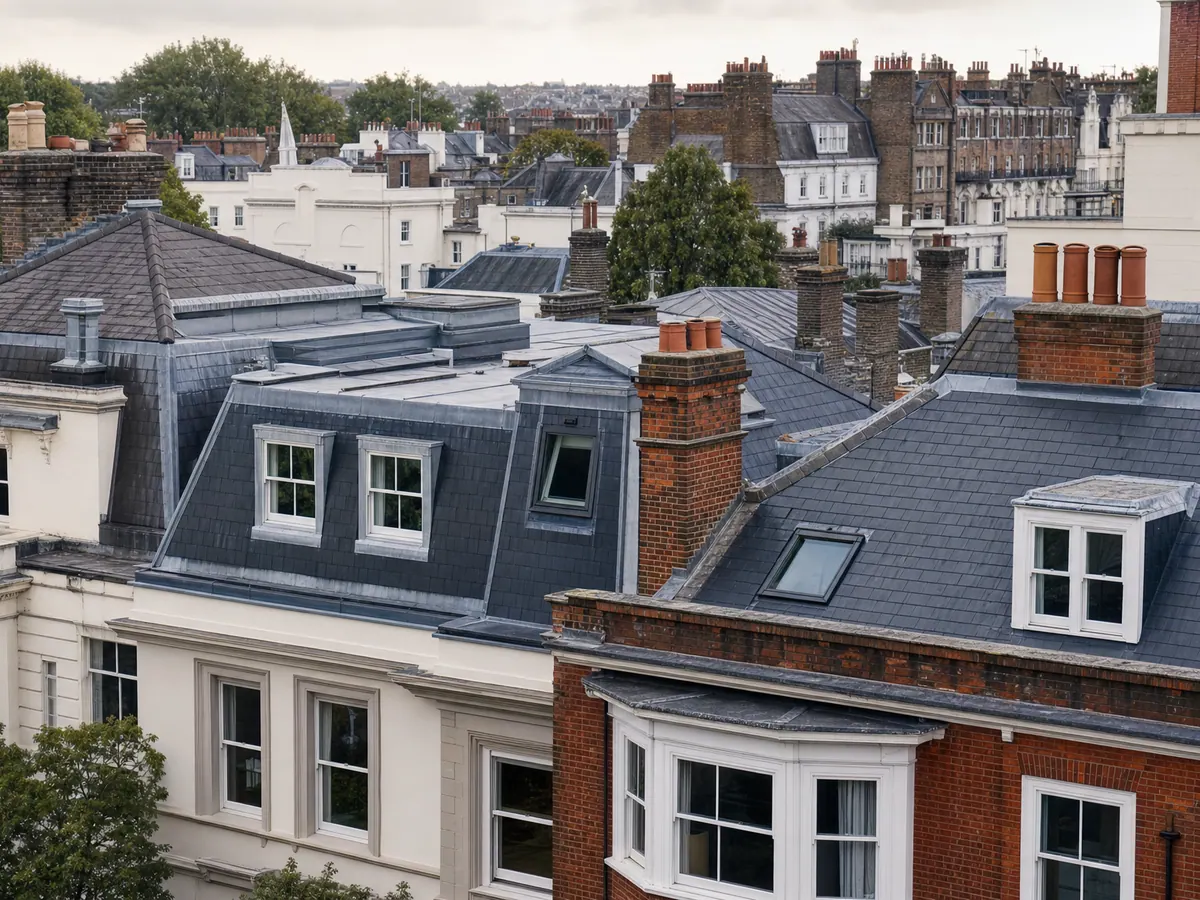
Project
Grade II* Listed Roof Replacement, Lonsdale Square
A documented natural Welsh slate roof replacement with consent-led planning, structural repairs, insulation and leadwork.
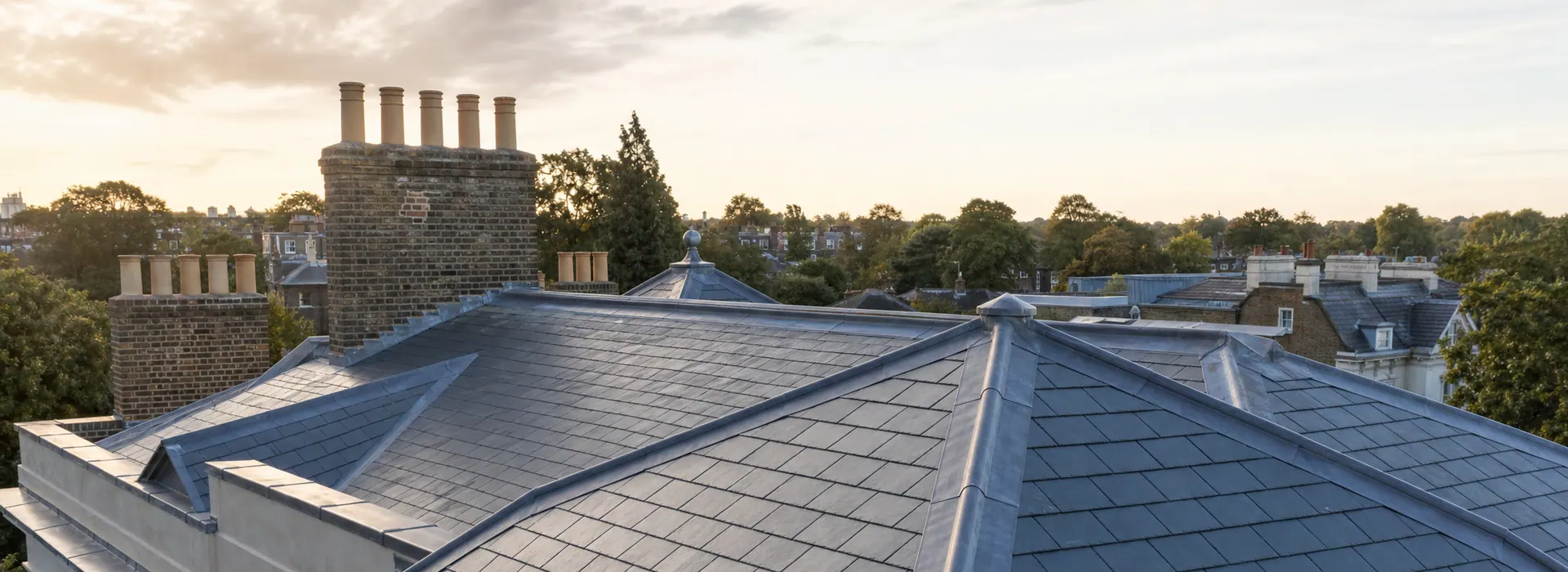
Roof Tiling & Slating
Covering condition and compatibility
A broken slate or tile can be a local defect. Repeated slipping, widespread fixing failure, brittle coverings, failing underlay or several deteriorated junctions can point to a broader roof refurbishment. The right scope depends on the condition of the roof as a whole, not simply the first visible failure.
Slate roofing and clay tile roofing share the same need for sound setting-out, secure fixing, drainage and well-resolved junctions, but they are not interchangeable materials. Pitch, gauge, profile, thickness, retained covering and the visual character of the building all influence what is appropriate.
On period, listed and conservation-area homes, retention and matching may also be guided by drawings, consent conditions or a professional specification. ER Group London can deliver the agreed roofing scope while keeping those project responsibilities distinct.
The aim is to avoid both extremes: replacing a roof that could be repaired, or repeatedly patching a covering that is no longer reliable as part of the wider roof build-up.
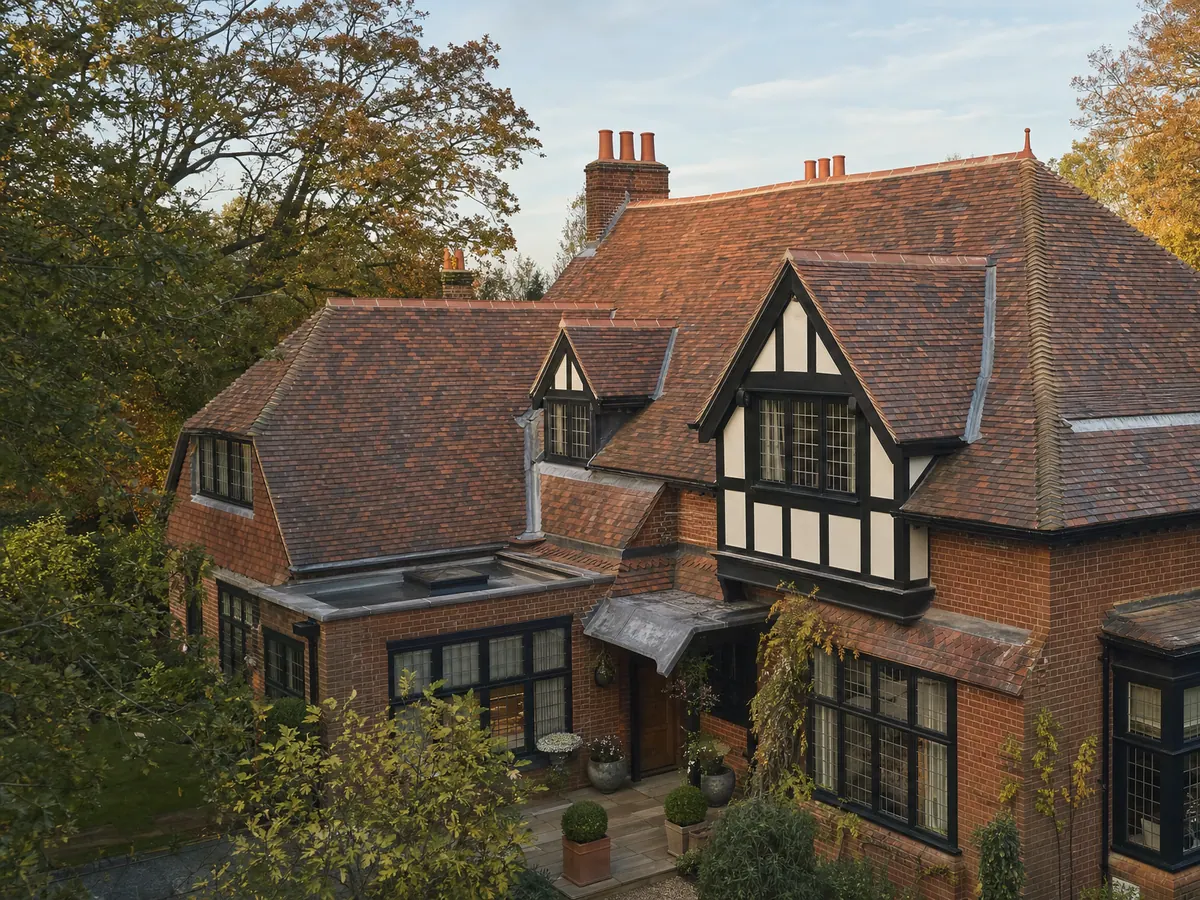
Where this service applies
The appropriate scope depends on condition, retained materials, roof geometry, access, leadwork, drainage and the property context.
Isolated damaged or displaced slates and tiles can sometimes be addressed without treating the entire roof as failed.
Widespread covering, fixing or junction defects may justify coordinated refurbishment rather than repeated patch repairs.
Retention, matching and visible character can be important where the roof contributes to the building’s significance or appearance.
Slate or tile often meets leadwork, masonry, valleys, parapets, rooflights and other construction that must weather as one roof.
Course alignment, profile and finish matter more where the roof is clearly visible from the street, garden or neighbouring property.
Architects and surveyors can provide drawings, specifications or approval information that the roofing scope must follow.
Inspection before specification
Retention and replacement decisions should follow the condition of the covering and the roof details around it.
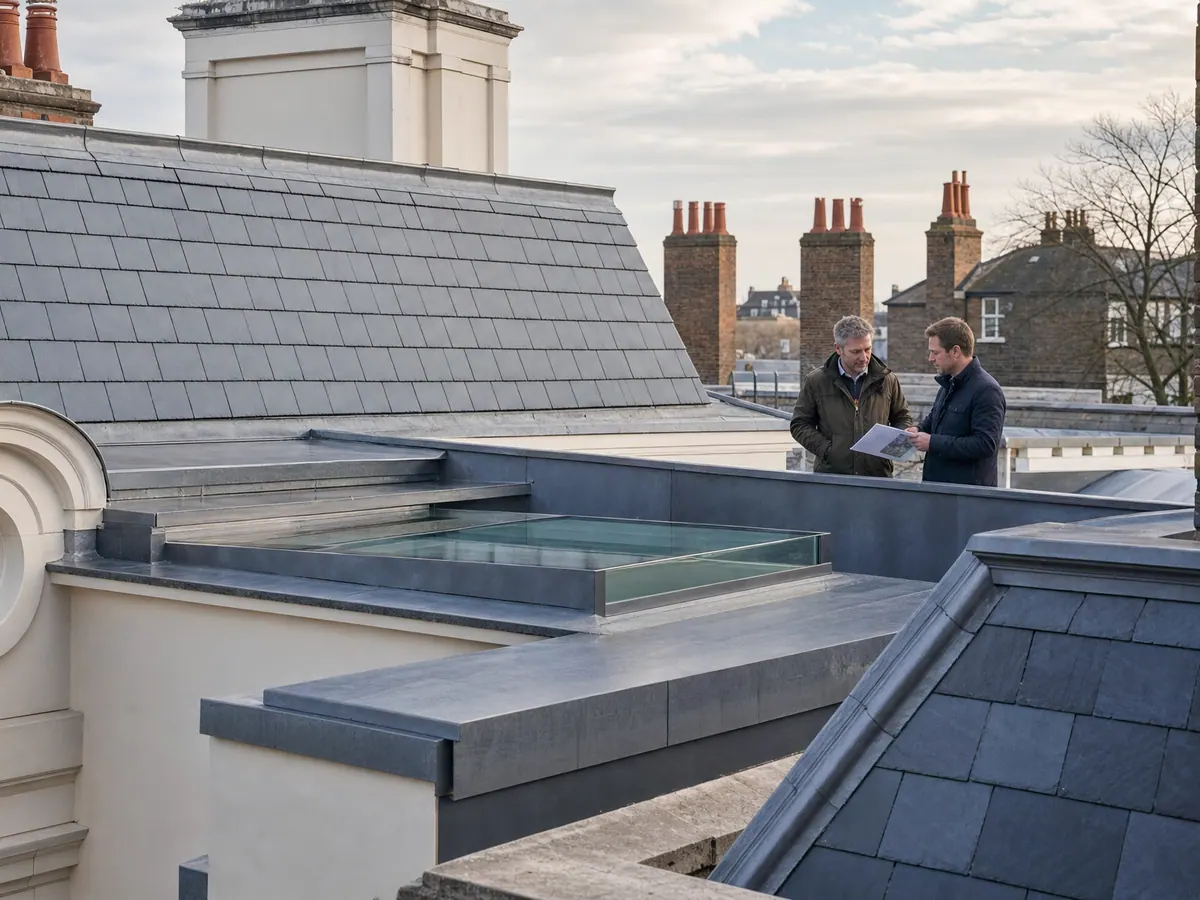
Existing condition
Review the covering, visible fixing condition, previous repairs, drainage and adjoining junctions before deciding how much of the roof needs intervention.
Natural slate roofing
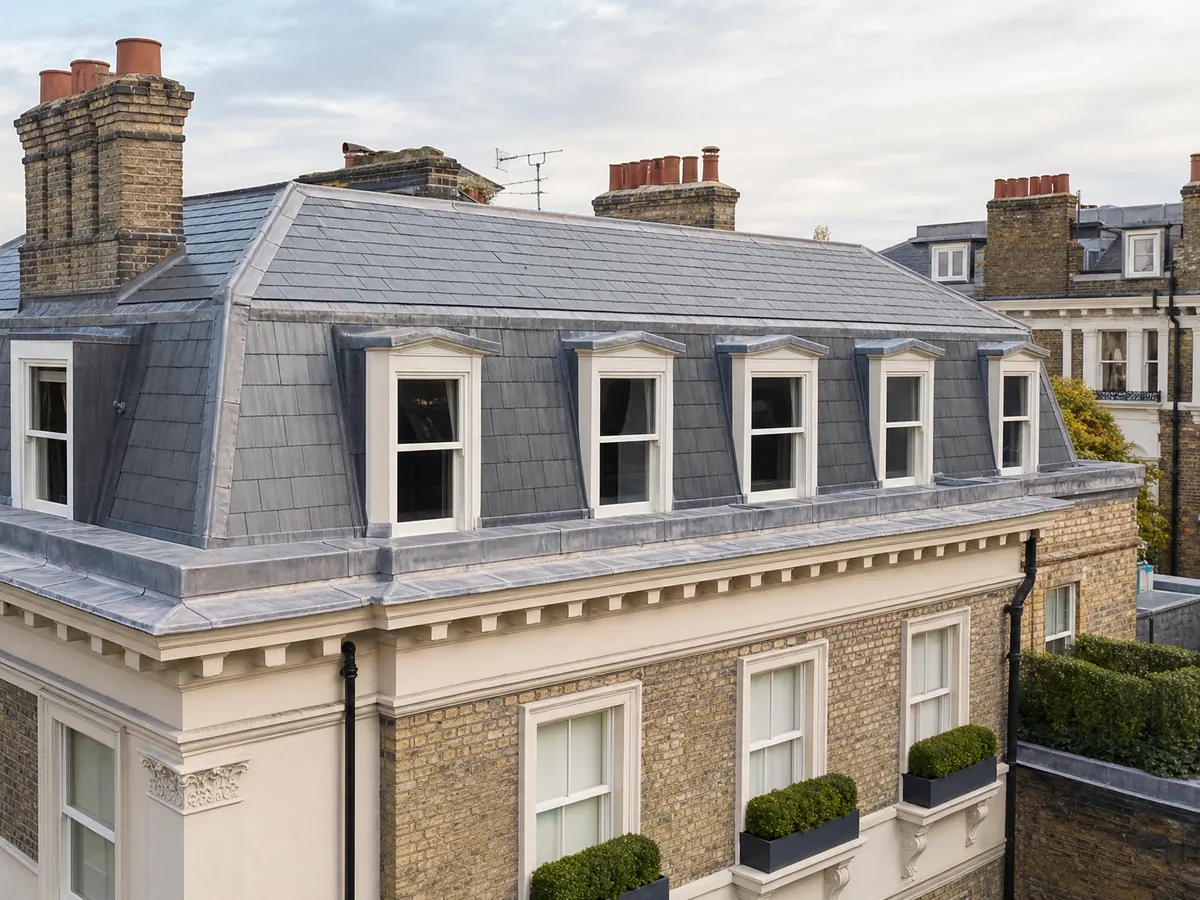
Slate selection and setting-out need to respond to the existing material, thickness, size, gauge, pitch, course pattern and the weathering details around the roof.

Clay tile roofing
Clay tiled roofs need the replacement profile, gauge, ridges, hips, verges and junctions to work with the existing roof rather than being selected by colour alone.
Tiled roof repair
A visible tile defect can be caused by movement, poor previous repair, failed fixings, weather exposure, impact damage or a weakness at an adjoining roof junction. The repair should follow the cause where it can be identified.
Verified Grade II* project
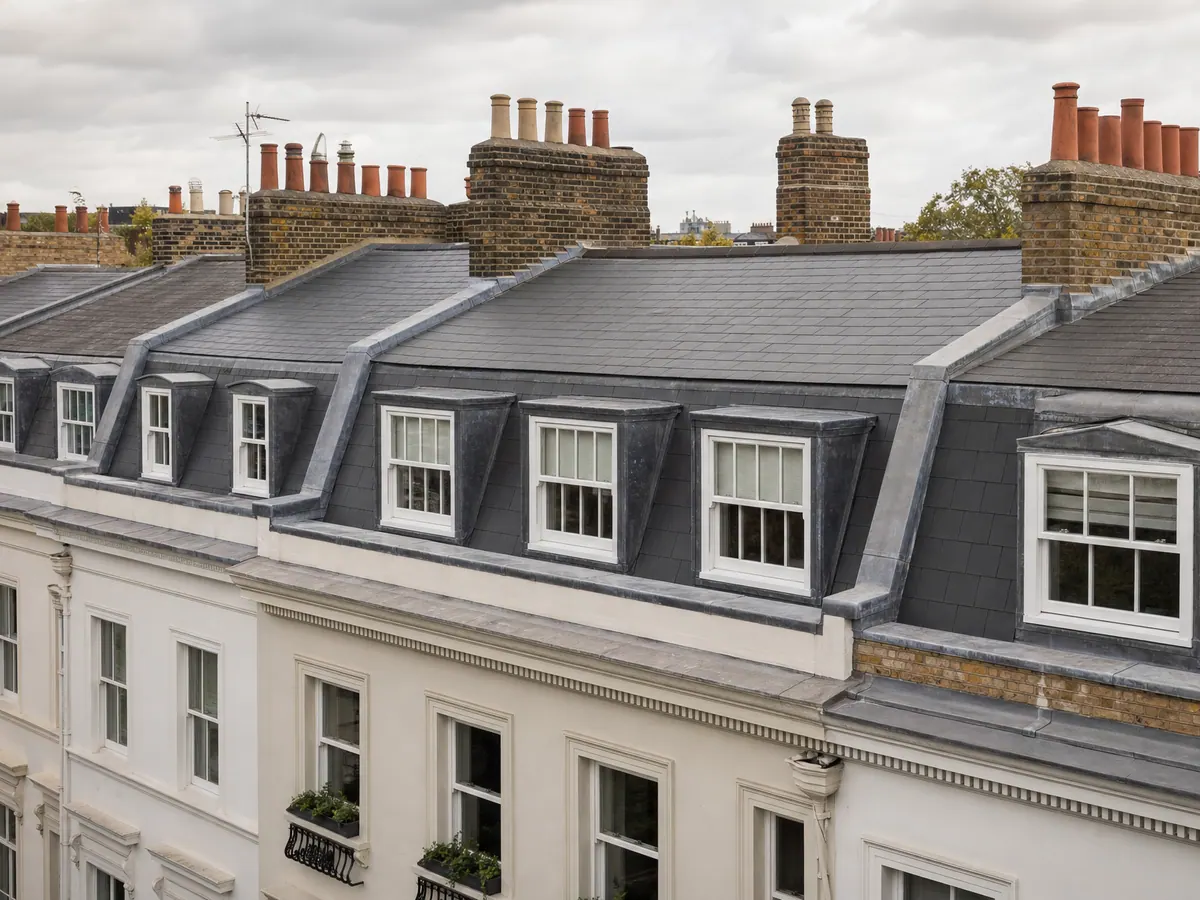
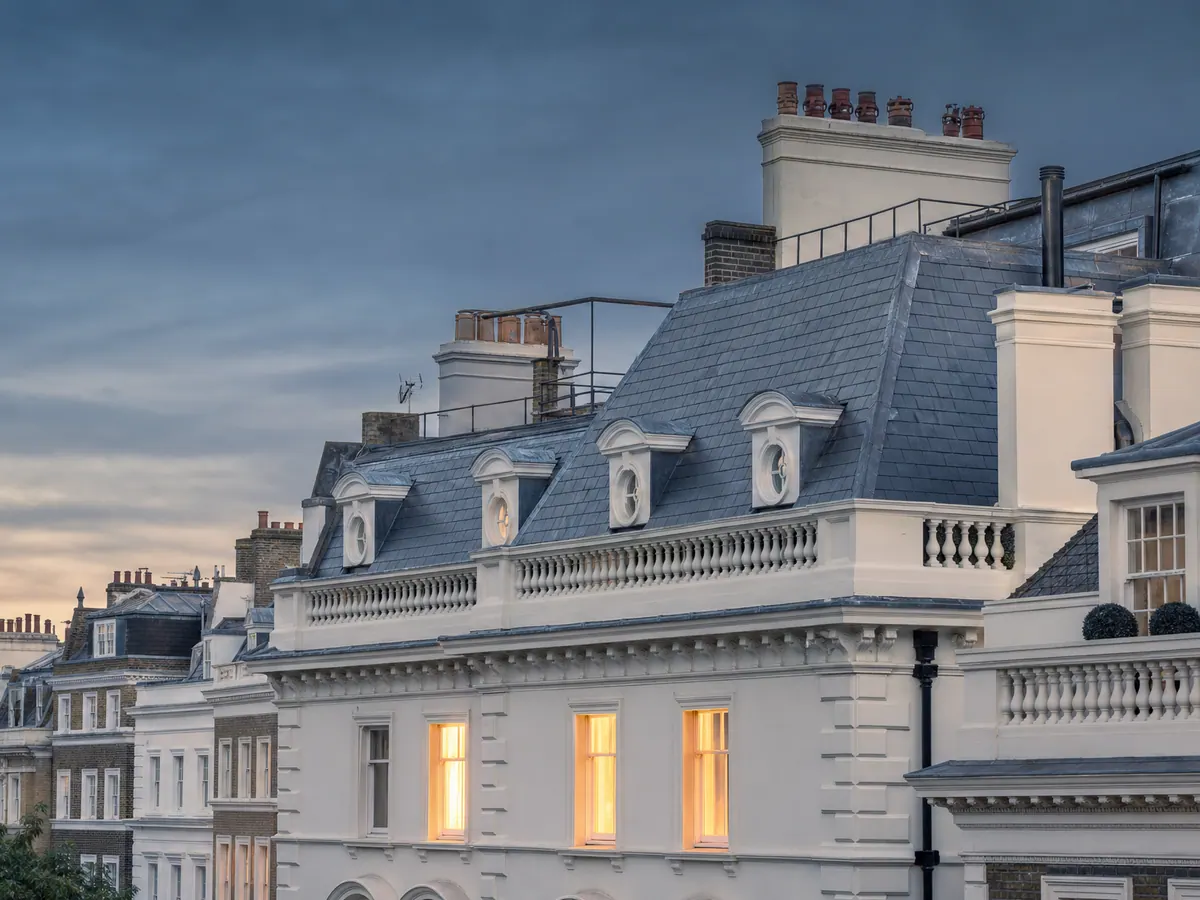
At Lonsdale Square, ER Group London replaced an inappropriate man-made slate covering after the recorded approval process. Structural remedials and insulation were addressed before the Grade II* listed terrace was re-slated in natural Welsh slate, with renewed leadwork and parapet repairs completing the roof scope.
Material and property constraints
A replacement covering has to work with retained fabric, roof geometry and the requirements that apply to the property.
Serviceable slate, tile and adjoining details should be identified before the scope assumes wholesale replacement.
A visually similar product is not automatically a suitable match; availability, dimensions and compatibility need to be checked.
Roof pitch, course layout, valleys, hips, dormers and changes of level influence the covering and its junction details.
Listed or conservation-sensitive work may need to follow approved drawings, conditions or professional material requirements.
Underlay, battens, substrate or structural defects may only become clear once controlled areas are opened.
Scaffolding, occupied rooms, gardens, neighbouring property and temporary weathering can affect the delivery plan.
Junctions and roof edges
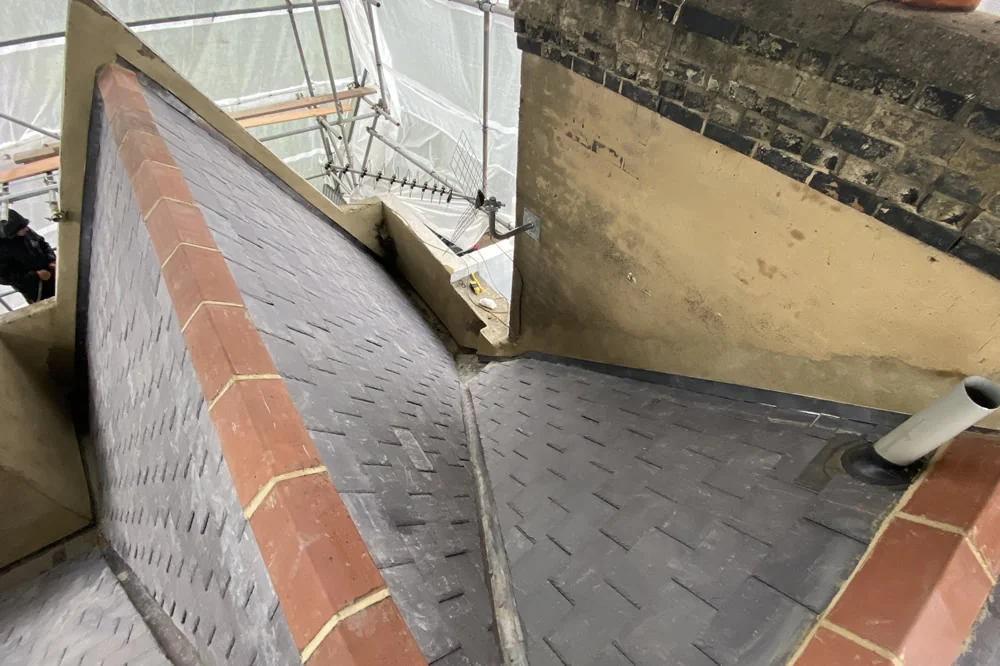
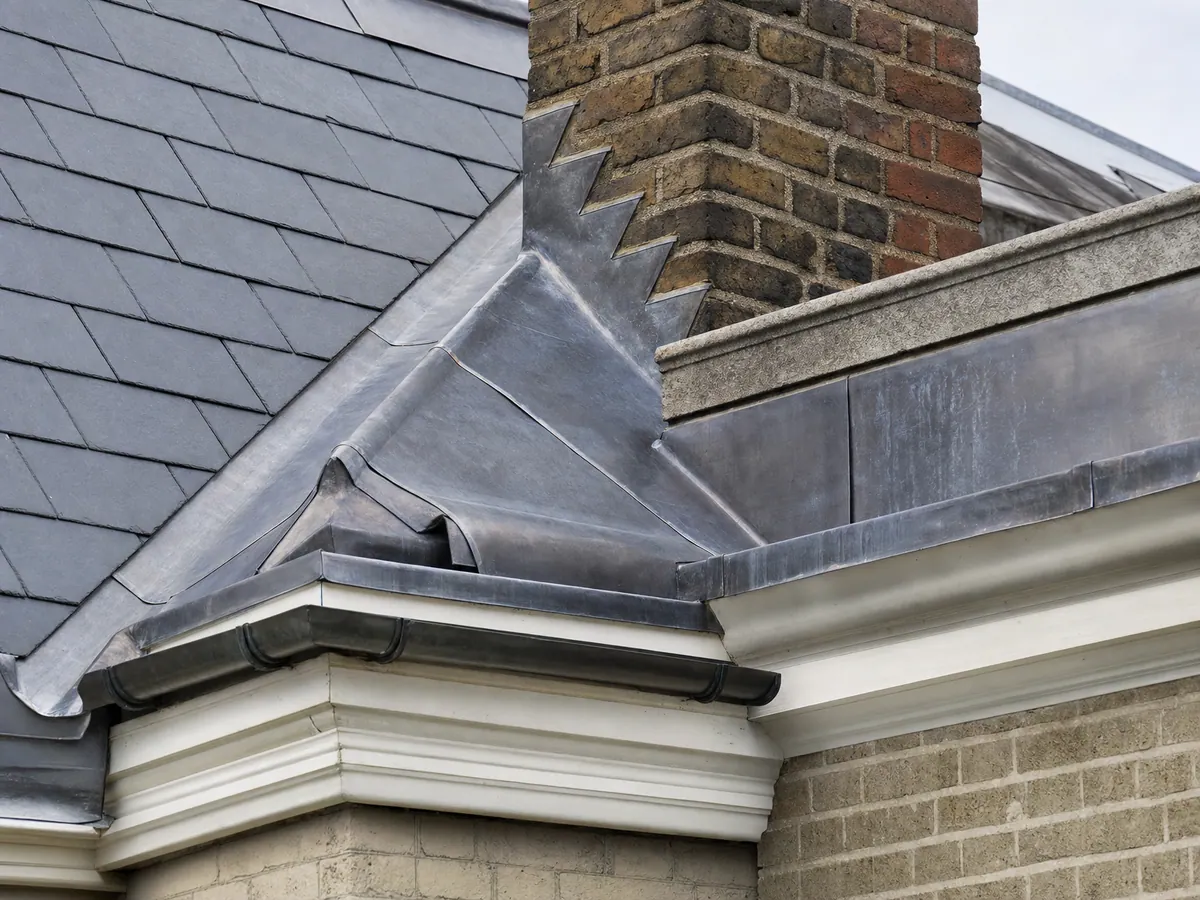
Valleys, abutments, ridges, verges and drainage need to be resolved with the slate or tile rather than treated as separate finishing items.
Valleys and abutments
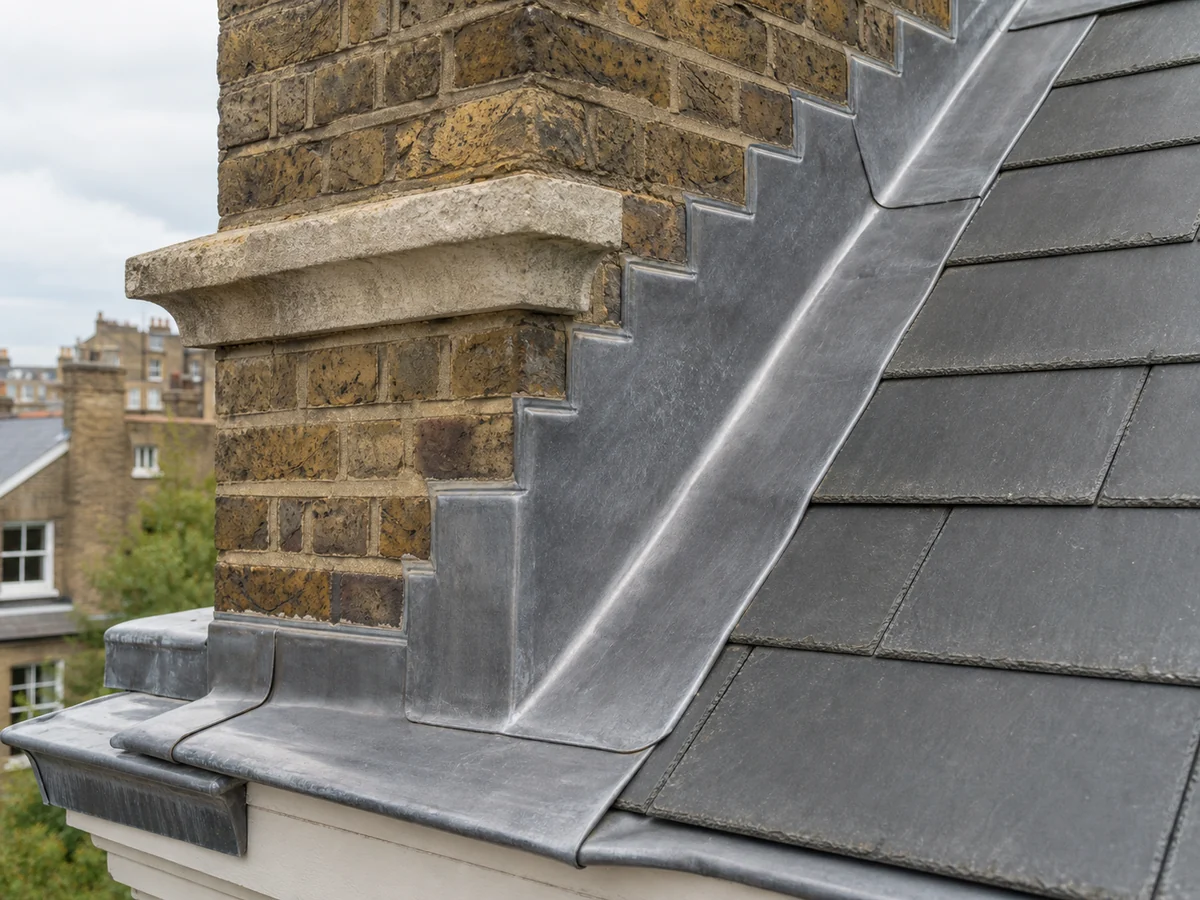
Valleys, chimneys, walls, dormers and other abutments connect the slate or tile to leadwork and masonry, making the junction part of the covering decision.
Roof edges
The perimeter and high points of the roof affect water shedding, wind exposure and the visible outline, so they should be considered with the main covering.
Wider refurbishment
Where the agreed scope includes underlay, battens, insulation, ventilation, drainage or adjoining roof areas, those decisions should be coordinated before the covering is closed over them.
Delivery controls
The agreed covering route, property protection, weather exposure and changes found during opening-up should remain clear from start to completion.
Retention, replacement and matching decisions are kept aligned with the agreed scope and any project specification.
Opening-up and closing roof areas are sequenced with the vulnerability of the property and forecast conditions in mind.
Access routes, occupied areas, gardens and finished surfaces are considered before materials and waste are moved through the property.
The completed covering and the principal junction details are reviewed, with relevant observations or future maintenance priorities recorded.
Where concealed defects are found during opening-up, the implications for scope, cost and sequence should be recorded before proceeding.
The handover should reflect the agreed roof scope, key materials, completed junctions and any maintenance priorities.
Project
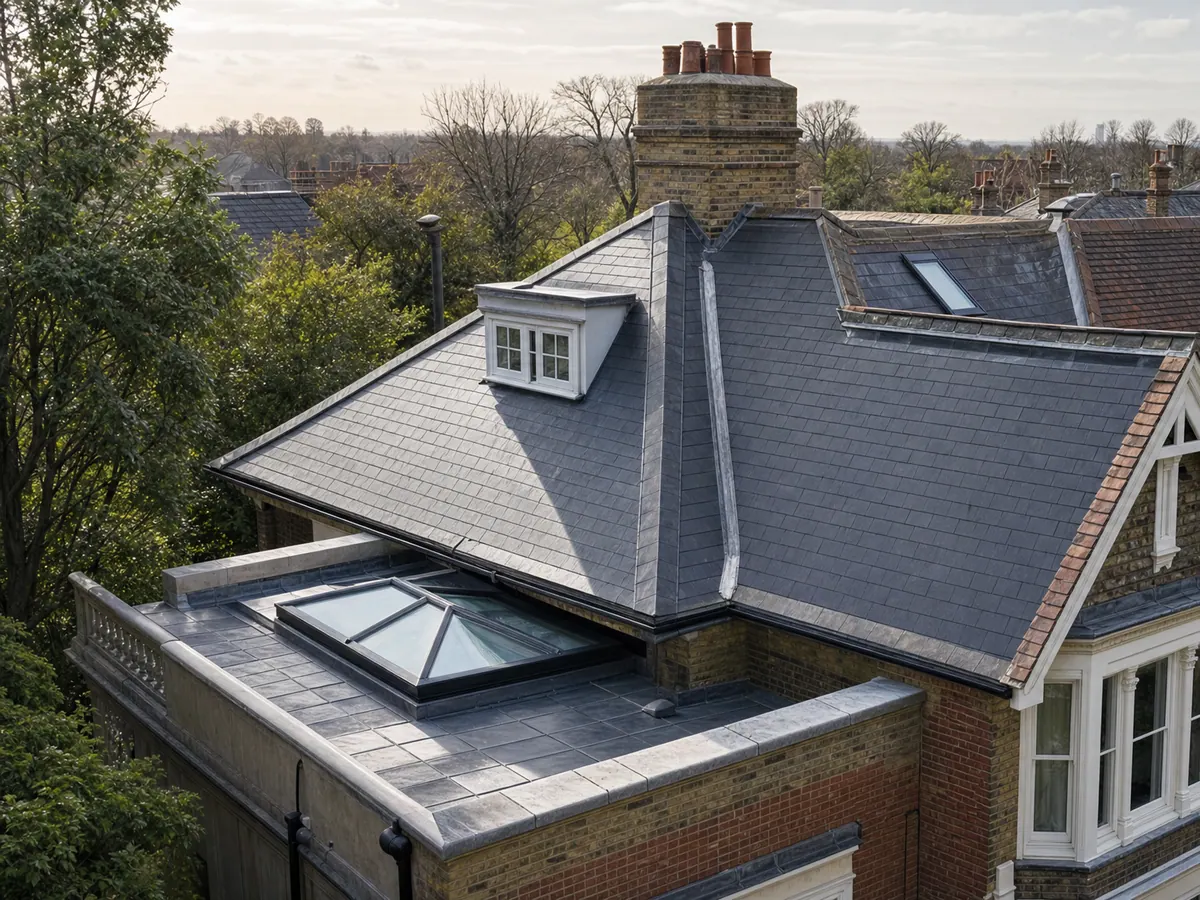
A documented natural Welsh slate roof replacement with consent-led planning, structural repairs, insulation and leadwork.
Project
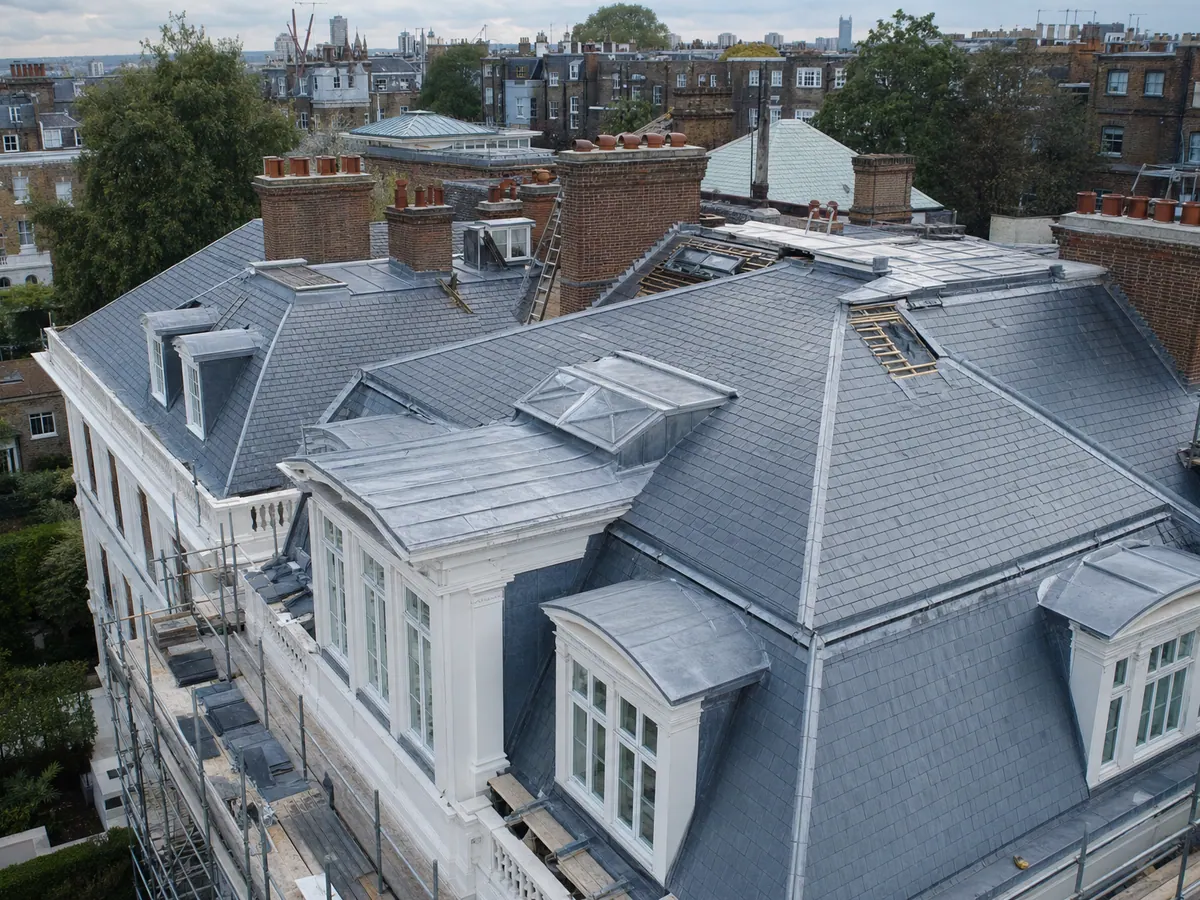
A documented Grade II* listed terrace project involving natural Welsh slate, renewed leadwork, parapet repairs, insulation and structural remedials.
Completed work
Completed residential roofing projects, including roof replacement, refurbishment, roof terraces and repair.
Slate & Tile Roofing FAQs
Slate & tiled roof enquiry
Send the property address, photographs where safe, the known covering type, symptoms or planned work, and any survey, drawings or heritage information already available.