Roof junctions and water paths
Leadwork works through the detail around it
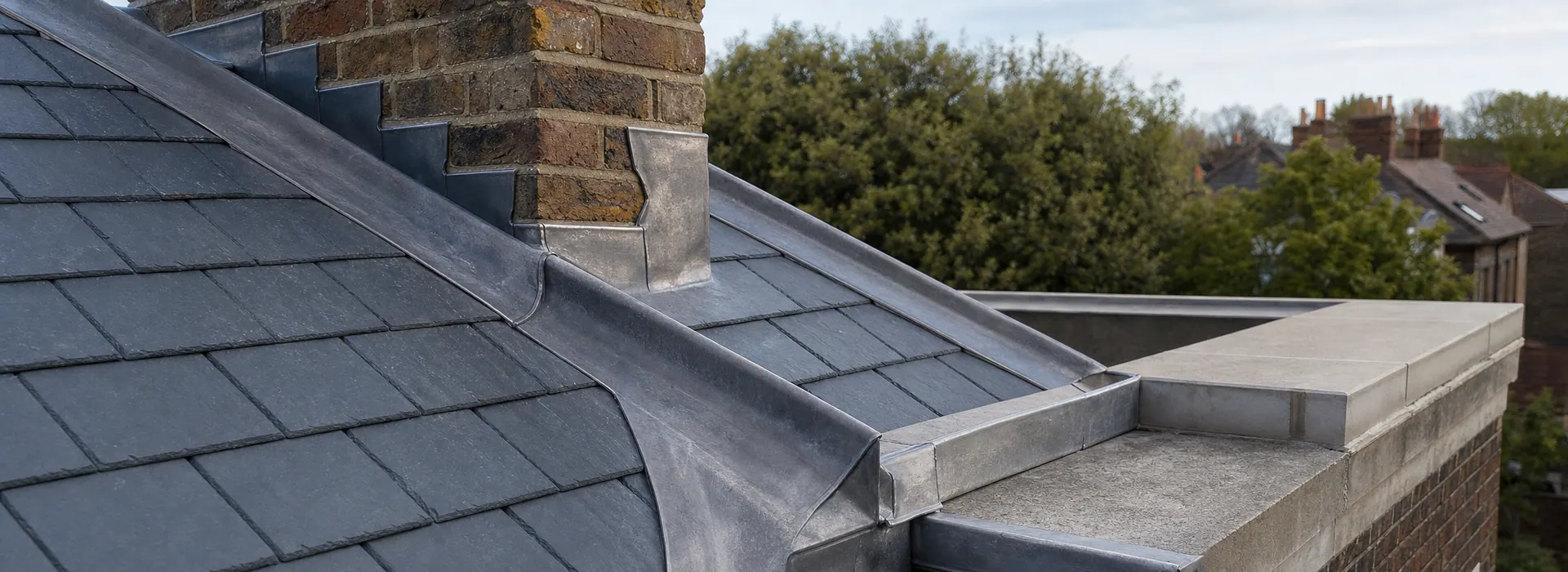
Leadwork is commonly used where roof coverings meet walls, chimneys, dormers, parapets and other construction, and where valleys or gutters collect and redirect water. These are often the parts of a roof where several materials and water paths meet.
A split, tired or patched piece of lead is not always the whole defect. Falls, laps, upstands, movement, substrate condition, outlets and the adjoining slate, tile, masonry or flat-roof construction can all affect whether the junction remains weather-tight.
ER Group London reviews the visible leadwork, the roof around it and the route water is taking before recommending repair, renewal or a wider roofing scope.
For period, listed and design-led homes, the finished form of visible leadwork can matter as well as its weathering role. The detail should follow the property, the project specification and the requirements of the particular junction rather than a single standard arrangement applied everywhere.
Where leadwork is used
The junction usually defines the leadwork
The right detail depends on what the lead is weathering, how water reaches it and the materials it has to connect.
Flashings and Abutments
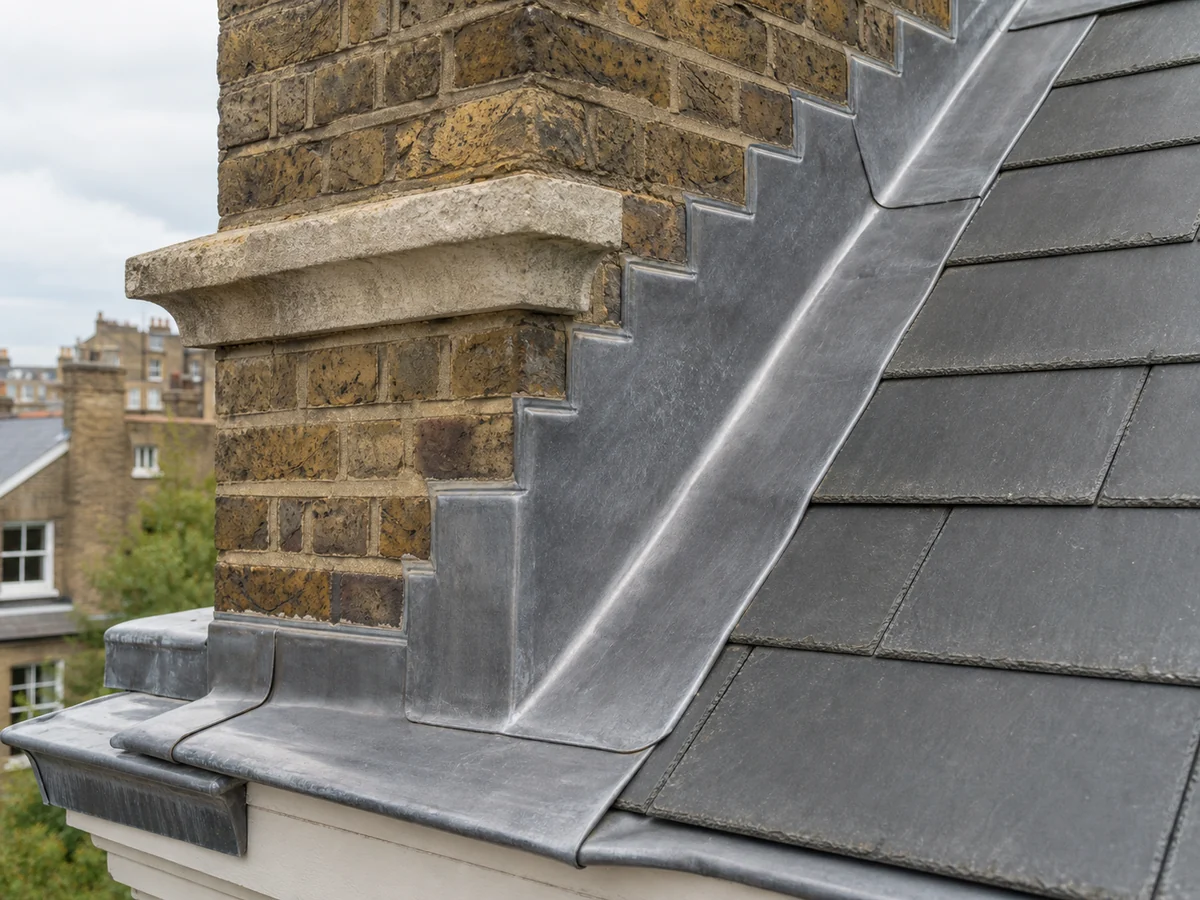
Weathering where pitched or flat roof areas meet walls, chimneys, dormers and other vertical construction.
Valleys
Junctions between roof slopes where water flow, falls and the adjoining covering all need to work together.
Lead-Lined Gutters
Gutters and channels where capacity, outlets, falls and surrounding roof construction influence the detail.
Parapets and Roof Edges
Cappings, edges and upstands exposed to weather, movement and adjoining masonry.
Chimneys and Dormers
Repeated changes of level and material where flashings, back gutters, soakers and interfaces are critical.
Roof Refurbishment
Leadwork renewed alongside slate, tile, flat roofing or heritage-sensitive work so the junctions match the wider roof scope.
Inspection and diagnosis
Find out why the junction is failing before replacing it
Visible leadwork, adjoining coverings, water paths and previous repairs should be reviewed together before the repair detail is fixed.
Existing defect
Look beyond the visible split or patch
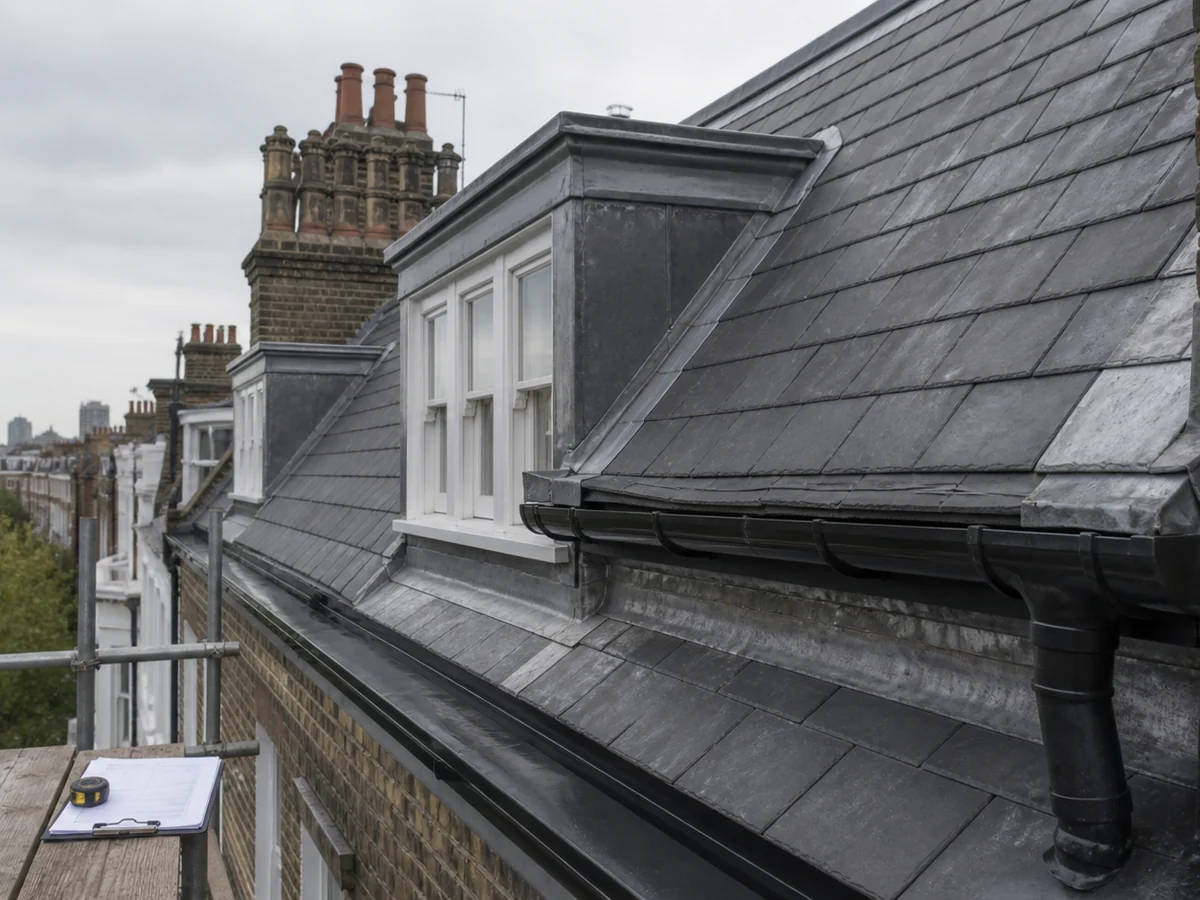
Inspection considers movement, previous repairs, laps, upstands, falls, outlets, substrate condition and the construction immediately around the leadwork.
- Visible condition and previous patching
- Water path, falls and outlets
- Laps, upstands and junction form
- Adjoining slate, tile, masonry or membrane
- Access and extent of opening-up
- Whether the defect is local or part of wider roof failure
Connected roof work
Coordinate the leadwork with the covering it protects
Where surrounding slate, tile, masonry or flat-roof work is also being repaired or renewed, the lead detail should be designed and sequenced as part of that wider scope.
- Slate and tile interfaces
- Flat-roof transitions
- Chimneys, parapets and masonry
- Valleys, gutters and outlets
- Refurbishment sequencing
- Repair versus renewal decision
Private residential leadwork
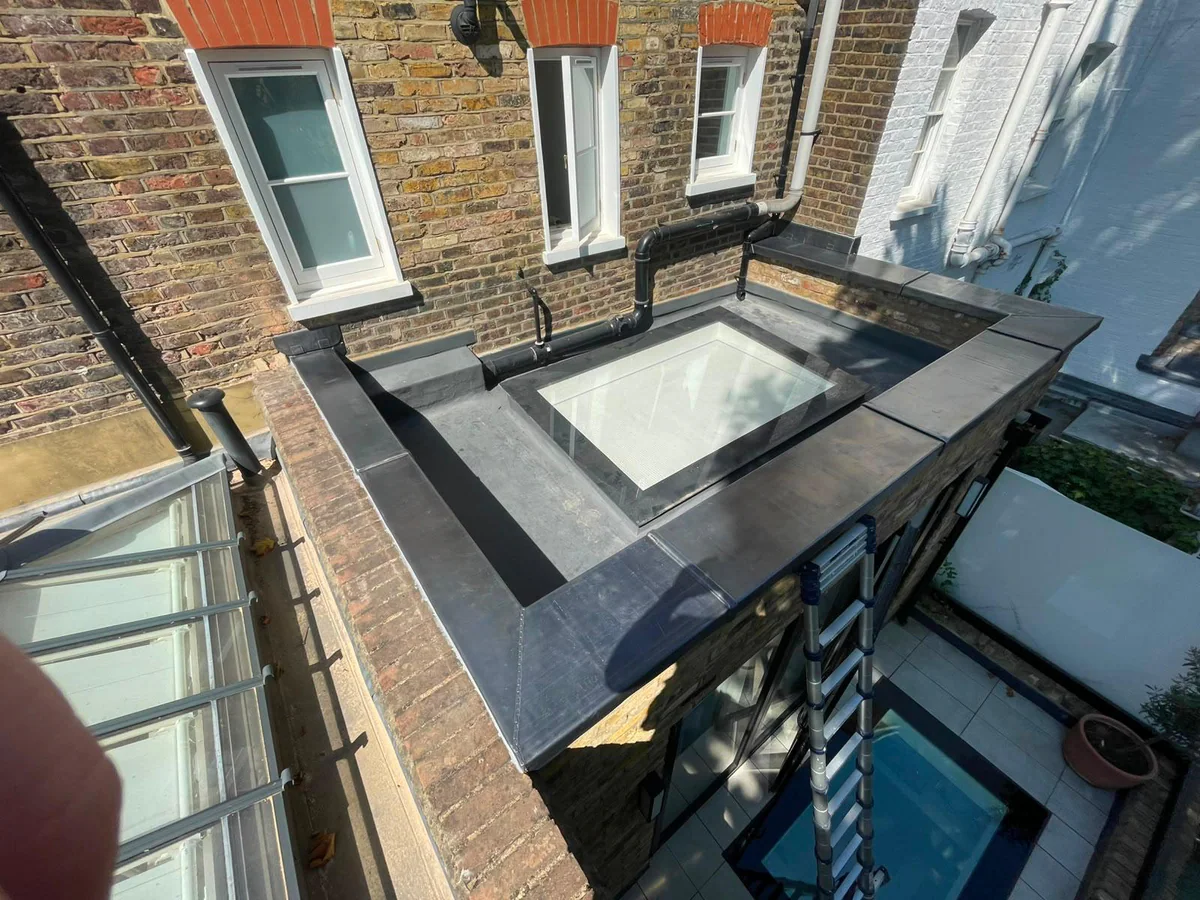
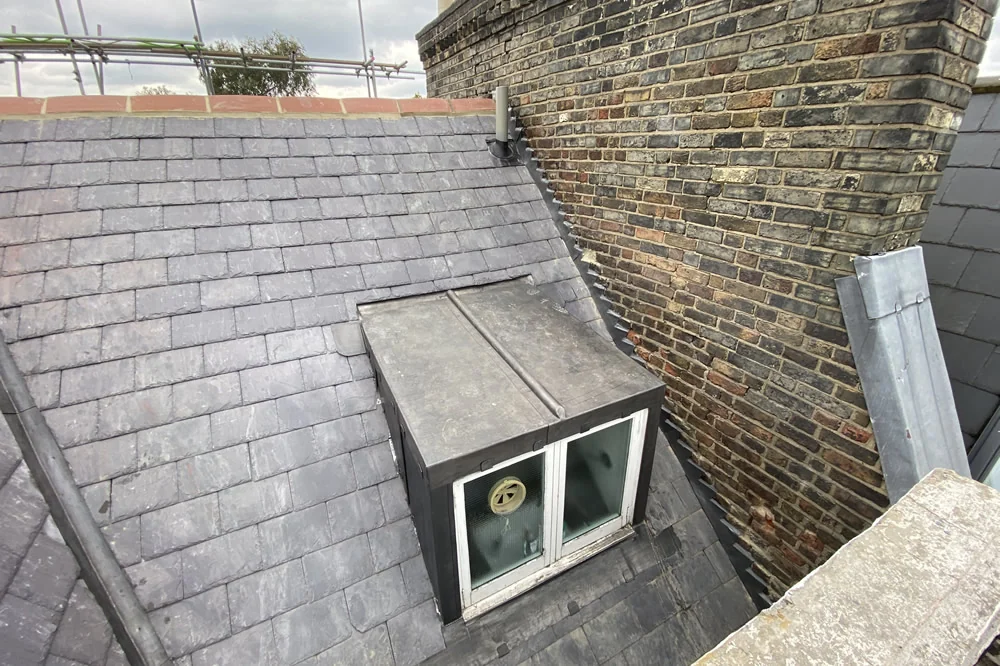
Kensington W8: lead capping to resolve a parapet leak
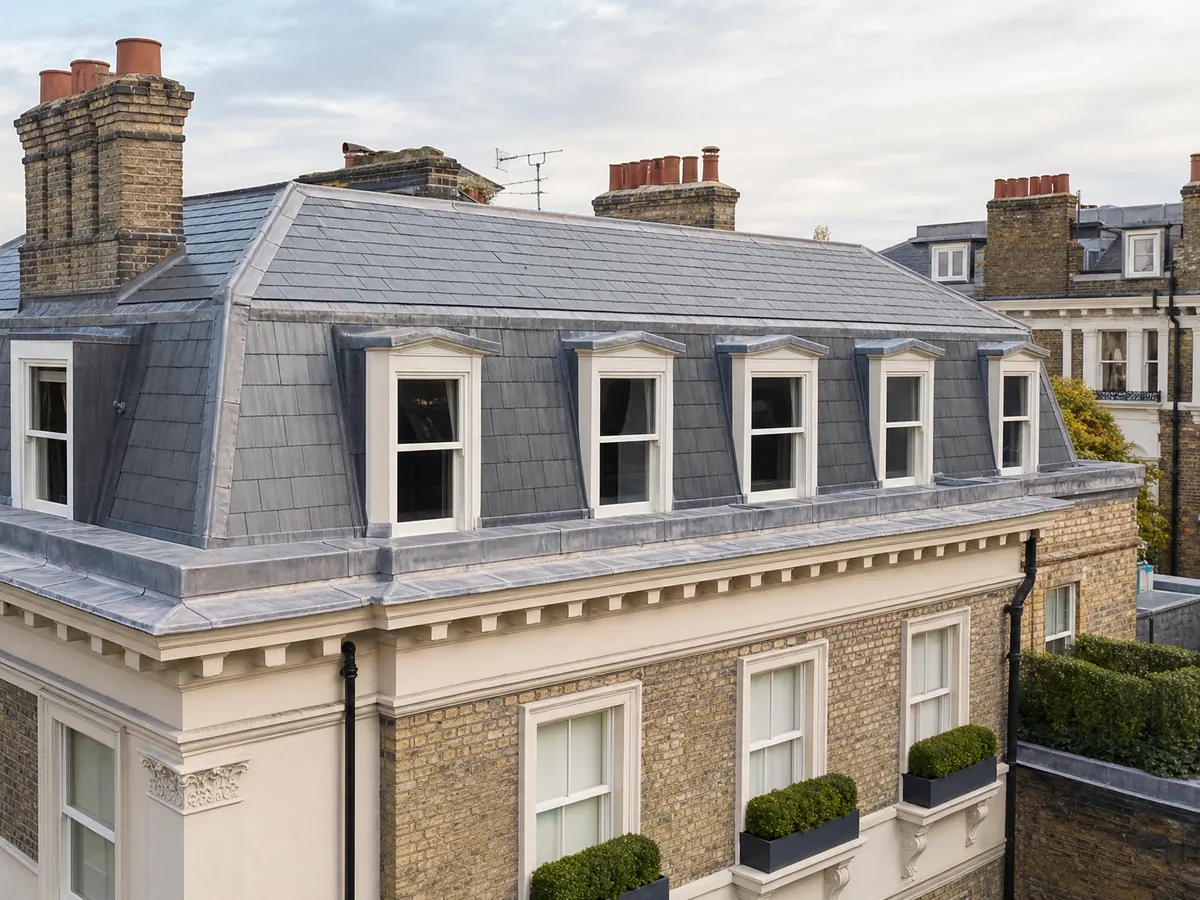
At a private home in Kensington W8, ER Group traced water ingress through the parapet wall. New Code 5 rolled lead capping with welded joints protected the exposed wall head and stopped the leak. The project shows how the repair followed the diagnosed water path.
Verified Grade II* project
Leadwork within the Lonsdale Square roof replacement
At Lonsdale Square, leadwork was renewed as part of the verified Grade II* roof replacement alongside natural Welsh slate, structural remedials, insulation and parapet repairs. The project shows why lead details should be considered with the surrounding roof rather than treated as isolated repairs.
- Grade II* listed terrace
- Natural Welsh slate and renewed leadwork
- Parapet repairs
- Structural remedials and insulation
- Documentary project photography
- Leadwork coordinated with the full roof scope
What determines the detail
Leadwork cannot be specified in isolation
Geometry, movement, substrate, drainage and adjacent materials set the practical limits of the detail.
Movement and Geometry
The size and shape of the junction influence how the leadwork accommodates movement and sheds water.
Substrate and Interfaces
A sound lead detail still depends on the construction beneath it and the materials it meets.
Existing and Hidden Condition
Opening-up may reveal defects behind flashings, in masonry, at roof edges or within previous repairs that were not visible beforehand.
Falls and Outlets
Lead-lined gutters, valleys and channels need a reliable route for water to leave the roof.
Adjoining Coverings
Slate, tile, flat-roof membranes, masonry and render can all influence the correct form of the leadwork.
Visible Character
On period and listed homes, the appearance of visible leadwork may matter as well as its weathering function.
Fabrication and interfaces
Detail the water path, not just the sheet lead
Flashings, valleys, gutters and cappings need a clear route for water and compatible connections to the roof around them.

Slate and tile interfaces
Keep the covering and lead detail working together
Covering thickness, pitch, abutments, valleys and the position of fixings all influence the junction between slate or tile and leadwork.
- Abutments and flashings
- Valleys and changes of pitch
- Ridges, verges and edges
- Chimneys, dormers and penetrations
- Slate or tile gauge and layout
- Connection to retained roof fabric
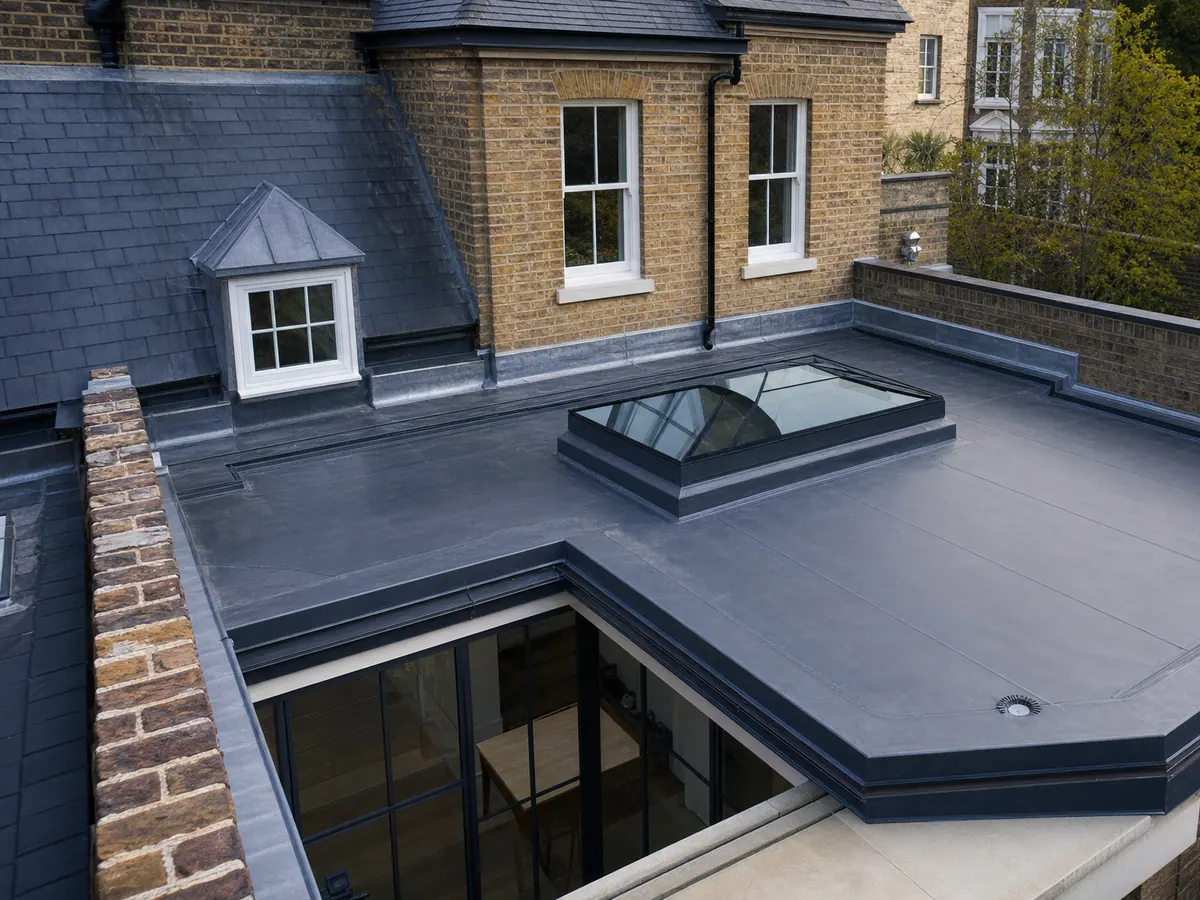
Gutters and parapets
Falls and outlets are part of the weathering detail
Lead-lined gutters, parapets and roof-edge details need to move water to a suitable discharge point while accommodating the construction and movement around them.
- Falls and outlets
- Parapet and edge conditions
- Movement and adjoining masonry
- Box gutters and valley gutters
- Access for future inspection
- Rainwater route after repair
Period and listed properties
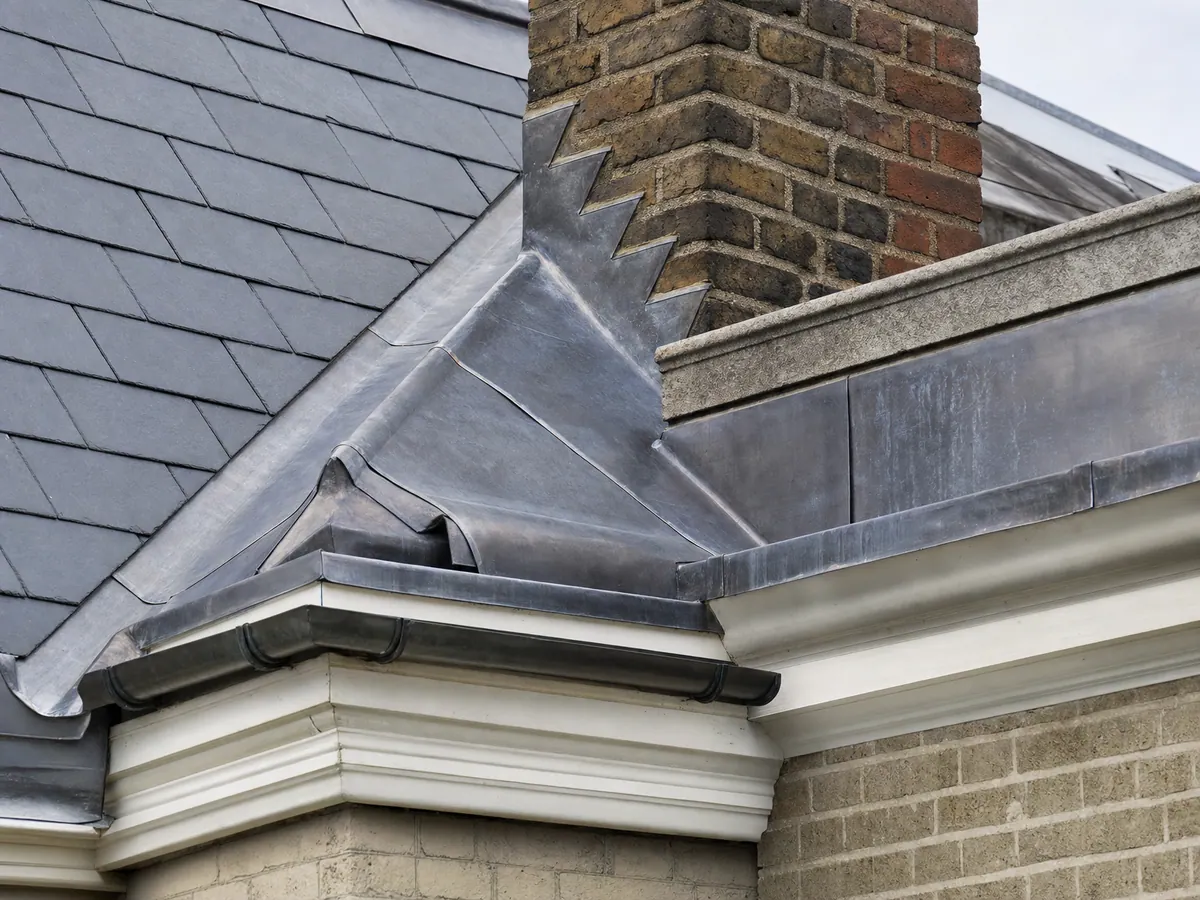
Visible leadwork should sit comfortably with the building
On traditional roofs, leadwork can be both a weathering component and a visible architectural detail. Its form should respond to the existing roof and any approved project requirements.
- Traditional roof character
- Heritage-sensitive detailing
- Approved project specification where relevant
- Coordination with slate, tile and masonry
- Retained fabric and visible roof form
- Professional-team input where appointed
Delivery and protection
Plan the work around the junction and the property below it
Access, opening-up, temporary weathering and sequencing are considered before the existing detail is removed.
Purpose-Made Detail
The proposed work follows the particular junction, surrounding materials and water path rather than a generic repair description.
Temporary Weathering
The sequence of opening-up and renewal should limit unnecessary exposure while the roof is vulnerable.
Property Protection
Access routes, finishes, gardens and occupied areas are considered where the work affects a private home.
Clear Changes
If opening-up reveals additional defects, the effect on the scope should be explained and agreed before extra work proceeds.
Detail Checks
The completed leadwork, surrounding covering, outlets and vulnerable junctions should be checked before handover.
Maintenance Awareness
Where leadwork forms part of gutters, valleys or parapets, future inspection access should be considered.
Leadwork FAQs
Questions About Residential Roof Leadwork
-
Common locations include flashings, valleys, lead-lined gutters, chimneys, dormers, parapets, abutments, roof edges and other points where different materials or roof planes meet.
-
Sometimes. The decision depends on the cause and extent of the defect, the condition of the existing lead, the surrounding construction and whether a local repair can provide a durable result.
-
The water path and surrounding roof need to be inspected. A leak near a chimney, valley, parapet or abutment can originate in the lead detail, adjoining covering, masonry, outlet or previous repair, so the visible internal stain is not enough to diagnose the cause.
-
Yes, where the work is within the agreed roofing scope and any required approvals or professional specifications are in place. ER Group London’s published Grade II* Lonsdale Square project includes renewed leadwork as part of the roof replacement.
-
Yes. It is often more coherent to review valleys, flashings, gutters, parapets and abutments alongside the covering and drainage details they serve.
-
No. The defect may sit in the leadwork, masonry, roof covering, outlet, adjacent flat roof, rainwater route or an earlier repair. The surrounding roof needs to be read before the repair route is fixed.
-
Send the property address, the location of the suspected defect, photographs where safe to obtain, the roof type and any relevant drawings, surveys or history of previous repairs.
Leadwork Enquiry
Discuss a leadwork problem
Send the property address, the location of the leadwork or leak, photographs where available and any wider roof, heritage or refurbishment information already known.