Chimney Repairs London
Chimney repairs for leaks, flashings and roofline masonry
Roofline chimney details
A chimney leak is often a roof junction problem
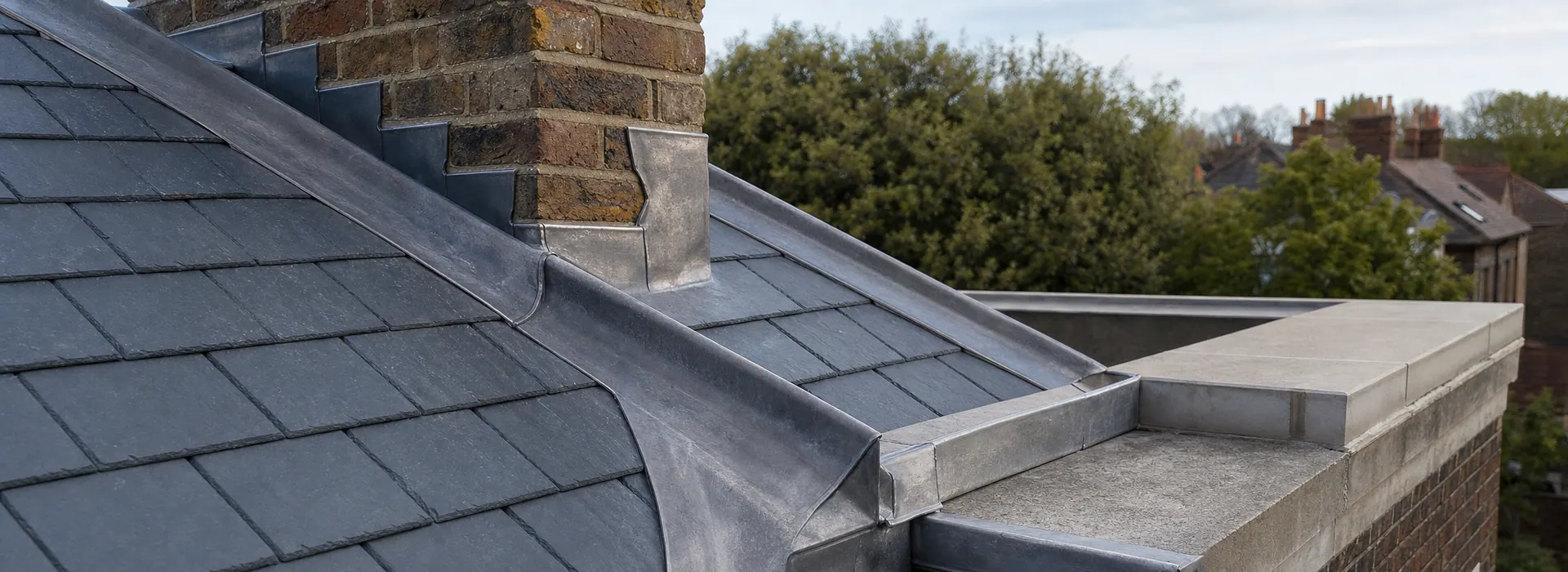
At roof level, a chimney stack brings together masonry, mortar, pots or caps, lead flashings, soakers, back gutters, abutments and the surrounding slate, tile or flat-roof covering.
Water can enter through cracked masonry, failed pointing, damaged flaunching, defective flashings, missing or poorly formed soakers, blocked back gutters or weakness in the adjoining roof. The stain inside the property may not sit directly below the actual defect.
ER Group London’s roofing scope focuses on the chimney details that form part of the roof weathering: visible roofline masonry, flashings, soakers, back gutters, abutments and adjoining coverings.
Flue, appliance, fire safety or major structural concerns are referred to the appropriate specialist where they fall outside a roofing weathering scope.
A useful enquiry includes photographs of the chimney, roof covering and internal symptoms, the property address, previous repair history and any listed-building or conservation-area context.

When chimney repair review helps
Chimney details that affect the roof
This service is appropriate where the chimney and surrounding roof need to be understood together before the repair is agreed.
Water ingress around a stack
Useful where damp, staining or external defects suggest water may be entering around a chimney, back gutter, flashing or abutment.
Period and traditional roofs
Older masonry, lime mortar, slate, tile and leadwork details may need compatible repair decisions rather than a quick sealant repair.
Failed flashings or soakers
Lead flashings, soakers and weathering details should be reviewed with the surrounding roof covering, not patched in isolation.
Visible masonry defects
Open joints, cracked flaunching, loose mortar or deteriorated roofline masonry may need local repair and, where necessary, further professional input.
Multiple roof junctions
Chimneys close to valleys, parapets, dormers, rooflights or flat-roof areas often need the wider water route considered.
Managed residential properties
Access, scaffolding, neighbours, gardens and property protection may need careful coordination in private homes, estates or managed buildings.
Repair scope
Define the roofline repair and identify connected issues
A clear chimney repair scope separates roof weathering work from flue, appliance and structural matters that may need separate specialist input.
Weathering review
Check the stack and the roof around it
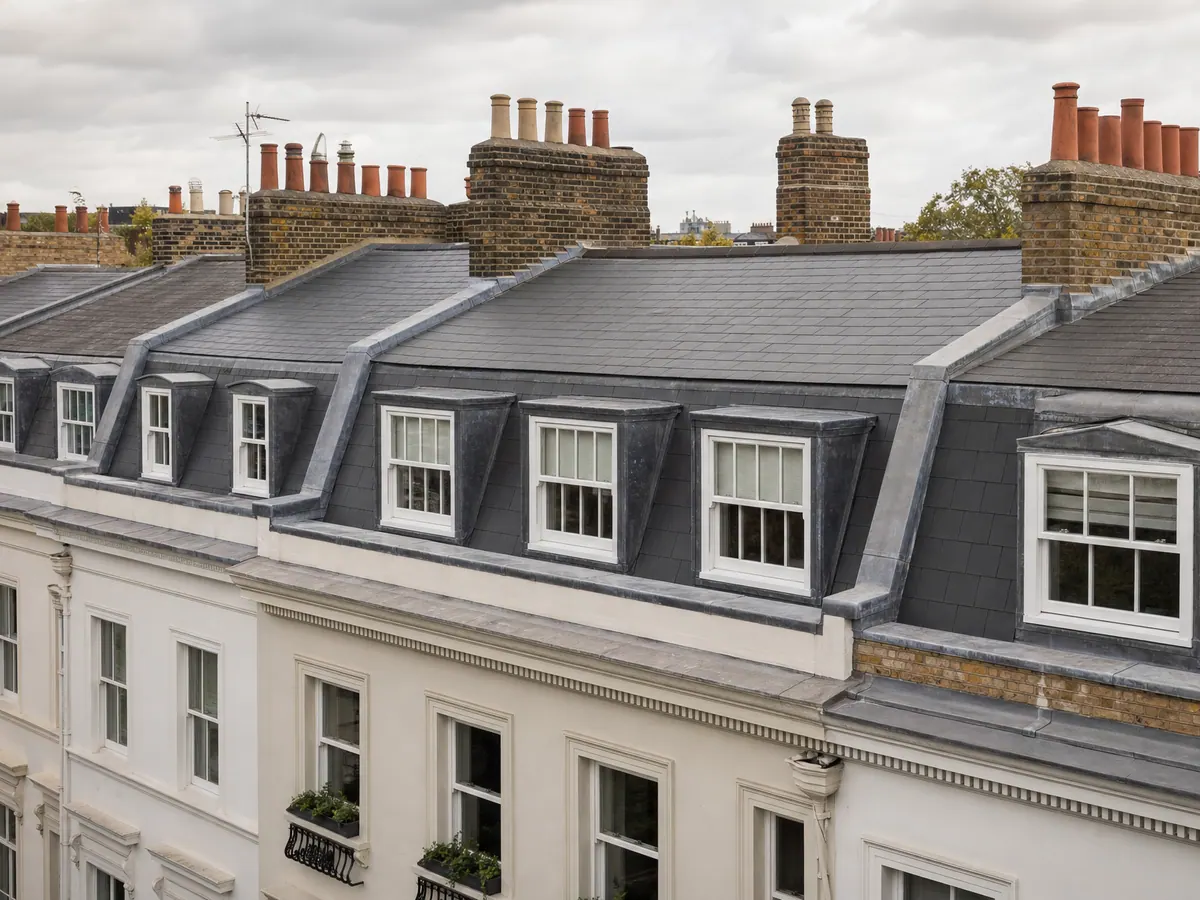
A visible review can consider chimney flashings, soakers, back gutters, abutments, mortar, pots or caps, masonry condition, surrounding slate or tile, roof falls and likely water paths.
- Lead flashings and step flashings
- Soakers, aprons and back gutters
- Abutments and roof junctions
- Mortar, pointing and visible masonry condition
- Surrounding slate, tile or flat-roof covering
- Valleys, parapets, gutters and nearby roof details
Boundary checks
Identify when another professional is needed
Structural movement, party-wall issues, flue use, appliance safety, listed-building permissions, lease restrictions or significant chimney rebuilding may need input beyond a roofing weathering scope.
- Roofline weathering scope clearly defined
- Structural concerns referred where required
- Active flue or appliance matters kept separate
- Listed, conservation or lease restrictions checked where relevant
- Professional-team input requested where the project requires it
Constraints
Chimney repairs need clear boundaries around roofline work
Roofing work can address visible masonry and weathering details while other safety, structural or consent matters are handled through the appropriate route.
Flue and appliance safety
Any active flue, stove, fireplace, boiler or appliance matter should be reviewed by the relevant competent specialist.
Structural concerns
Leaning stacks, significant cracking, movement or instability may require structural advice before repair decisions are made.
Listed or conservation context
Visible changes, materials and repair methods may need to be checked where the property is listed, in a conservation area or otherwise sensitive.
Access and protection
Scaffold, roof access, neighbouring property, gardens and rooms below the chimney should be considered before work proceeds.
Hidden water routes
Water may enter at a nearby valley, parapet, rooflight, gutter or covering and appear near the chimney internally.
Previous short-term repairs
Sealant, cement fillets or patch repairs can hide the original defect and may need careful review before a durable repair is specified.
Detail decisions
Chimney repair depends on the junction detail
The surrounding roof often decides whether a chimney repair is reliable.
Leadwork and abutments
Repair the weathering detail, not just the visible split
Flashings, soakers and back gutters need correct support, cover, laps, movement allowance and a sound relationship with both the masonry and roof covering.
- Cover, laps and chased flashings
- Soakers and step flashings
- Back gutters and water discharge
- Movement and support
- Masonry interface
- Relationship with slate, tile or flat-roof areas
Masonry and coverings
Match the repair to the surrounding fabric
Repointing, local masonry repair, flaunching, slate or tile reinstatement and mortar details should be considered against the existing roof character, exposure and property age.
- Compatible materials
- Roof covering interface
- Exposure and appearance
- Localised masonry repair
- Repointing and flaunching where appropriate
- Heritage or period-property context
Chimney repair FAQs
Chimney repair questions
-
No. Staining near a chimney may point toward the stack, but water can also track from nearby valleys, flashings, rooflights, parapets, gutters or roof coverings. A visible review should guide the repair scope.
-
No. ER Group London’s roofing scope covers visible roofline weathering details. Active flues, appliances, fireplaces, boilers and related safety matters require the appropriate competent specialist.
-
Often, yes. At roof level, chimney repairs may involve lead flashings, soakers, aprons, back gutters and abutments. These should be reviewed with the stack and surrounding roof covering.
-
Significant movement, leaning, cracking or instability may require structural advice before roofing weathering repairs are defined.
-
It depends on the property and scope. Listed-building, conservation-area, lease, party-wall or visible-change considerations may apply, particularly where the work changes the chimney’s appearance or involves more than like-for-like repair.
-
Yes, where the roofline scope is suitable. Materials, mortar, leadwork and visible details should be considered in relation to the existing fabric and any relevant professional or statutory requirements.
-
Please send the property address, photographs of the chimney and surrounding roof, photographs of any internal staining, known previous repairs, roof access information and any listed or conservation context.
Next Steps
Discuss roofline chimney repairs
Send the property address, photographs of the stack and surrounding roof, internal symptoms, previous repair history and any known listed-building or conservation-area context.