Gutter Clearing
Debris, leaves, moss, silt and vegetation can restrict the rainwater route and cause overflow back toward the building.
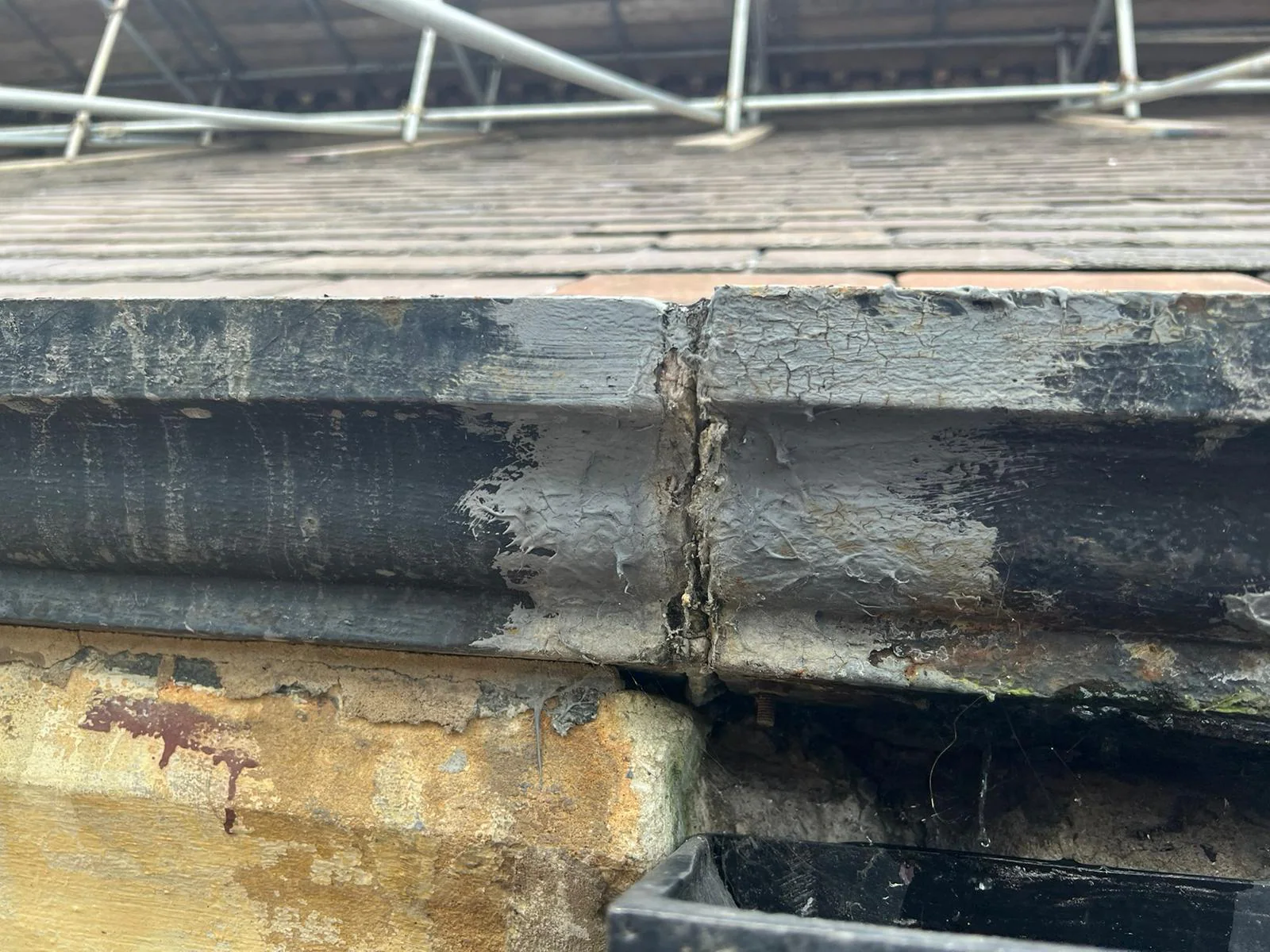
Rainwater route
Guttering and rainwater goods affect the roof because they decide where water is collected, held, discharged and sometimes misdirected.
Overflowing gutters can point to blockage, poor falls, undersized routes, outlet problems, corrosion, failed joints, local damage, roof debris or defects higher in the roof.
ER Group London’s scope covers above-ground guttering and rainwater goods where they interact with the roof, including gutters, outlets, downpipes, hoppers, fascias, parapets, box gutters, valleys and roof-edge drainage details.
Underground drains, soakaways, below-ground discharge routes and wider civil drainage systems are separate and need a separate drainage assessment.
For period and high-value homes, material choice, visual appearance, access, fascias, parapets, neighbouring property and roof geometry should be considered before rainwater goods are replaced or repaired.
A strong fit for
This service is most useful where gutters, outlets and roof details need to be understood as one connected drainage system.
Overflow may be caused by blockage, poor falls, outlet restrictions, undersized routes, roof debris or a defect elsewhere in the rainwater path.
Leaking joints, separated sections, sagging runs or poorly supported gutters can direct water back onto masonry, fascias or finished elevations.
Cast iron, lead, decorative profiles, visible elevations and traditional details may need careful material and appearance decisions.
Concealed, parapet and box-gutter drainage needs careful review because failure can discharge into the building.
Rainwater goods may need coordination when coverings, leadwork, fascias, outlets, valleys or roof edges are renewed.
A clear record of guttering condition, access points and rainwater priorities can support planned maintenance and future inspection.
Rainwater scope
A guttering scope should identify the roof conditions that affect how rainwater is collected and discharged.
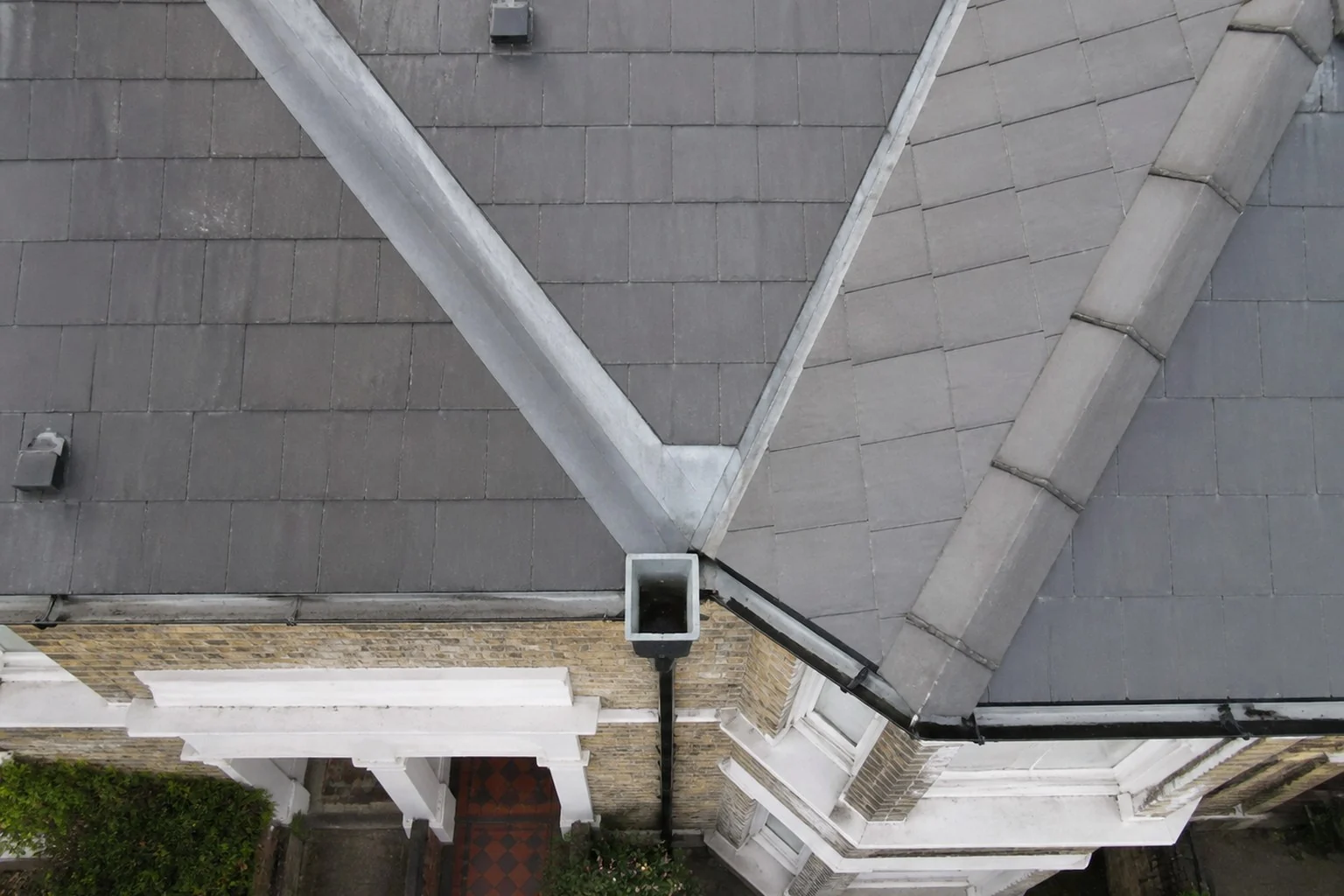
Visible drainage path
The review can consider roof falls, valleys, gutters, outlets, downpipes, fascias, parapets, hoppers, junctions, blockages and the relationship with walls or lower roofs.
Material and appearance
Material, profile, fixing, colour, visible character and compatibility with fascias, masonry and roof edges matter, especially on period, listed, conservation-area or carefully finished homes.
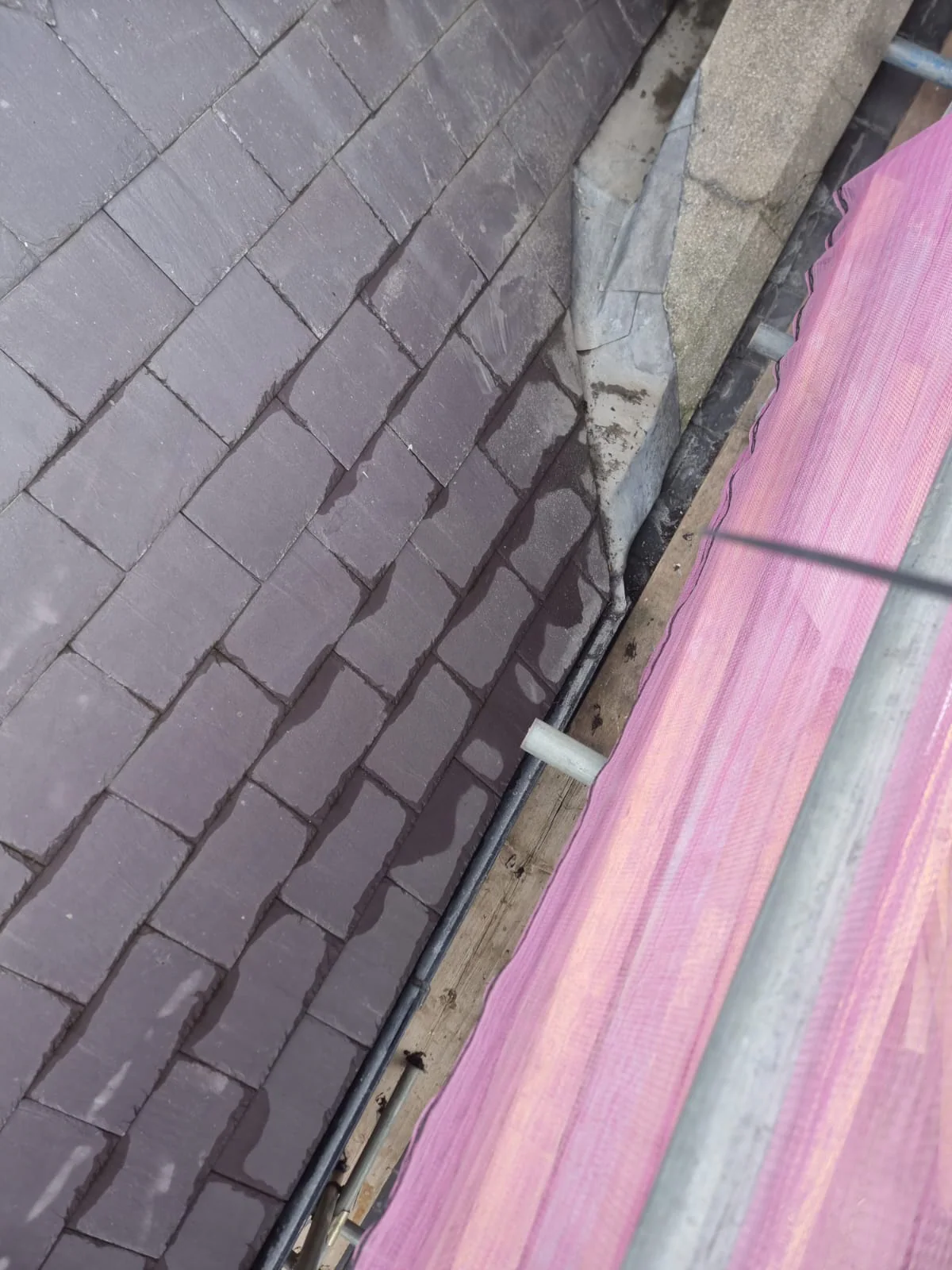
Scope boundaries
Gutters and downpipes can be inspected and repaired as part of the roof. Underground drainage and site-wide hydraulic design require a separate scope.
Blocked or defective underground drains, soakaways and below-ground discharge routes are outside this roofing service and should be investigated separately.
Capacity depends on roof area, rainfall assumptions, falls, outlets and the existing discharge arrangement, so it must be considered for the individual property.
Shared boundaries, rear elevations, gardens, conservatories and neighbouring property can affect safe access and discharge decisions.
Fascia, rafter-end, masonry or parapet conditions may only be confirmed once gutters are accessed or removed.
Listed, conservation or visible-change constraints may require professional or authority input where relevant.
High-level, valley, parapet or box-gutter areas may need suitable access before their condition can be properly assessed.
Detail decisions
The best detail decisions are usually made by reading the roof geometry first.
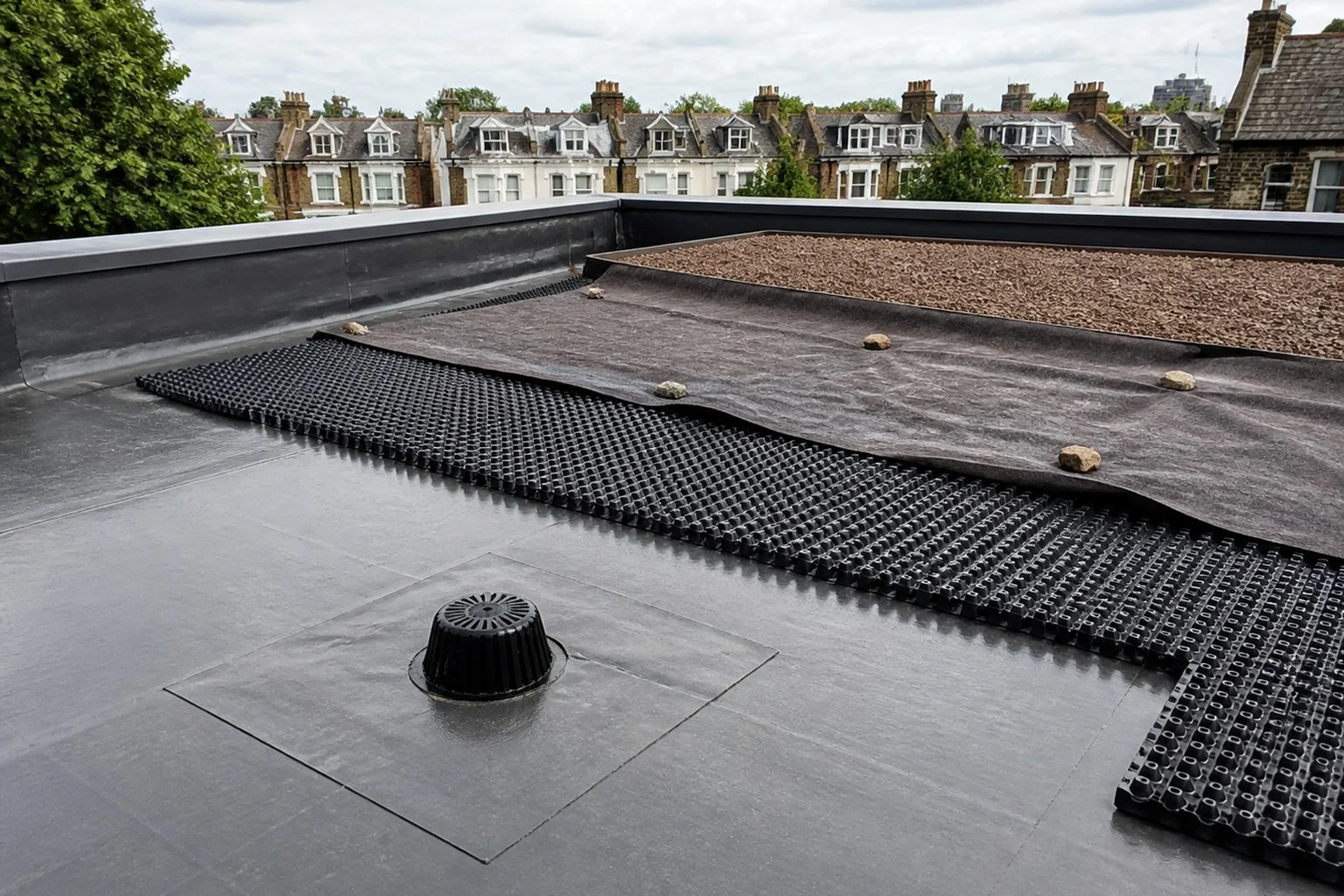
Maintenance or replacement
A blocked outlet may need maintenance, while corrosion, poor falls, unsupported runs, defective joints or incompatible materials can justify repair or replacement. The surrounding roof should guide the decision.
Connected roof work
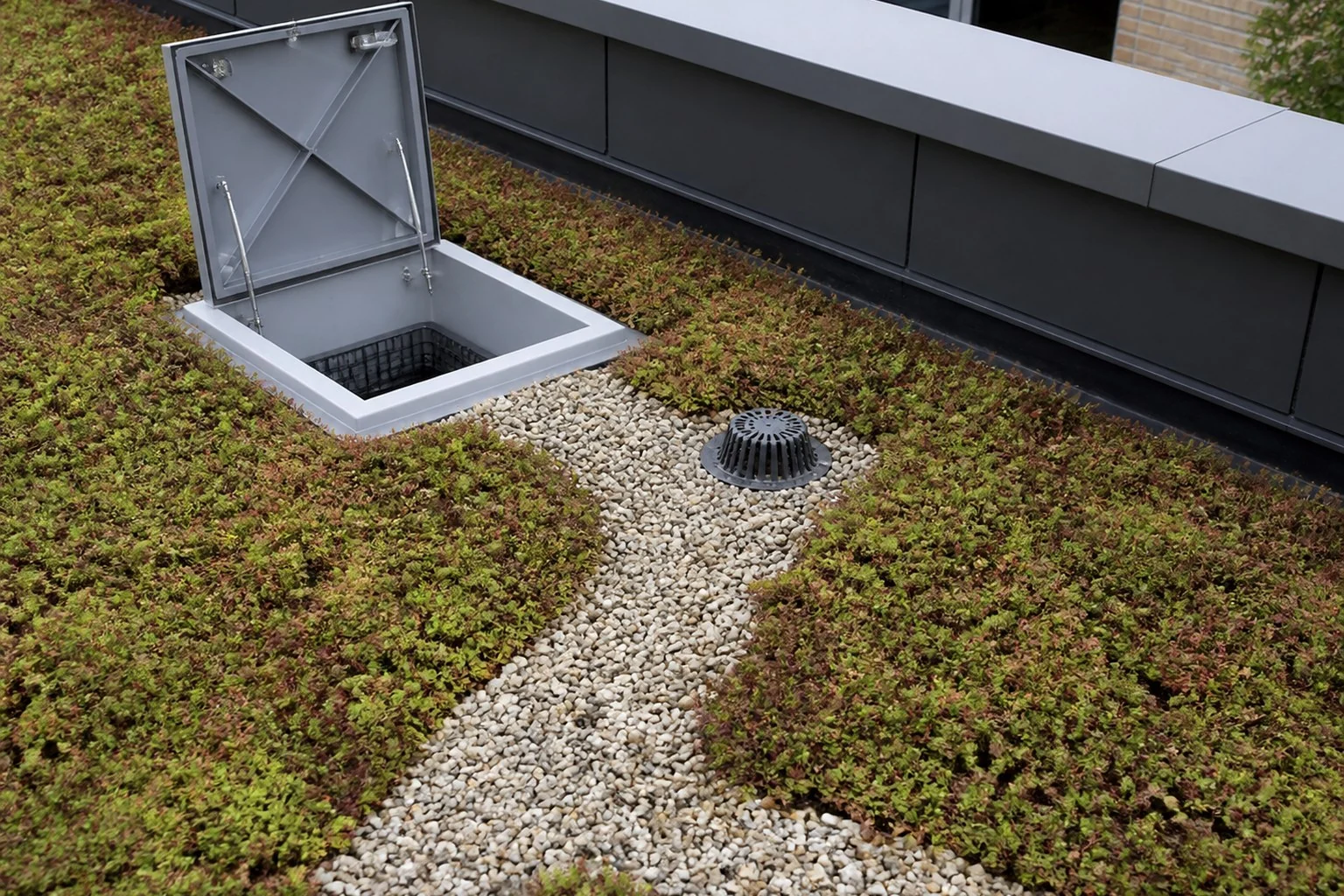
Valleys, parapets, lead gutters, chimneys, dormers and flat roofs often decide how rainwater goods should be repaired or renewed.
Ongoing care
Rainwater goods are often a maintenance issue as much as a repair issue. Keeping gutters, outlets and discharge routes inspectable helps reduce repeat defects.
Debris, leaves, moss, silt and vegetation can restrict the rainwater route and cause overflow back toward the building.
Outlets and hoppers should remain visible and accessible enough to confirm they are discharging correctly.
Joints, brackets and fixings can loosen, corrode or move, changing the fall and reliability of the gutter run.
Overflow can damage fascias, masonry and finishes, so the surrounding fabric should be checked as part of the review.
Parapet, valley, box-gutter and concealed areas may need closer access rather than relying on ground-level observation.
A record of visible issues, completed work and recommended intervals can support estate managers and private homeowners.
Rainwater goods FAQs
Next Steps
Send the property address, photographs of gutters and outlets, overflow history, roof type, access constraints and any known drainage information.