Coverings
Visible slate, tile or flat-roof covering condition, including slipped, cracked, loose or deteriorated areas.

Planned Roof Maintenance London
Planned rather than reactive
Planned roof maintenance provides a structured way to review visible condition, record priorities and deal with suitable smaller items without confusing them with larger repair or refurbishment work.
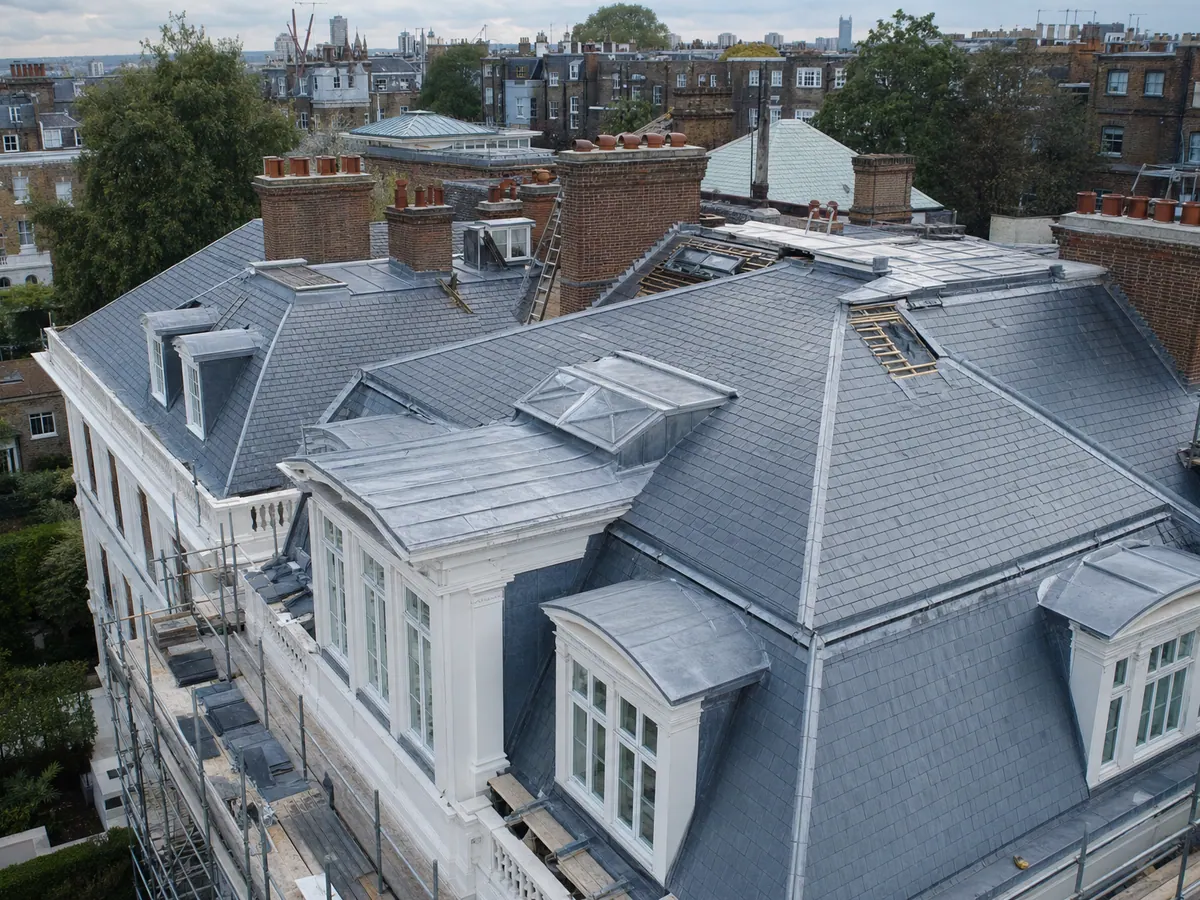
On period homes and more complex roofs, coverings, valleys, flashings, gutters, outlets, chimneys, parapets and previous repairs should be considered together because deterioration at one detail can affect another.
A planned maintenance review can help owners, household managers, estate managers and managing agents understand what appears serviceable, what needs monitoring and what should move into a more detailed repair or refurbishment route.
Where the review identifies wider failure, the recommendation should separate immediate priorities from further inspection, defect-led repair or planned renewal.

Who it suits
This service is intended for owners and managers who want a clearer view of visible roof maintenance needs over time.
Useful where an owner, household manager or estate manager needs clear roof priorities and records.
Helpful where valleys, parapets, chimneys, leadwork and rainwater routes create several connected maintenance points.
Visible roof and drainage condition can be reviewed at suitable points where access and weather allow.
Repeated slipped coverings, blocked outlets or local weathering issues can be recorded in context rather than treated as unrelated events.
A recorded priority view can support maintenance budgeting and future project planning for suitable residential properties.
Maintenance records can help show when several connected elements should move into a broader renewal scope.
Maintenance scope
A useful maintenance visit should distinguish suitable minor work from defects that need a different level of investigation, access, repair or renewal.

Condition record
Depending on access, the review can consider visible coverings, fixings, flashings, valleys, gutters, outlets, rooflights, chimneys, parapets and previous repairs.
Priority maintenance
Suitable maintenance items should be distinguished from defects that need focused repair, scaffolded access, professional input, refurbishment or complete renewal.
Maintenance boundaries
The value of a planned programme comes from better records and timely decisions rather than promises that defects cannot occur.
Some roof areas may not be safely accessible during every visit or in every condition.
Concealed timber, deck, underlay and moisture conditions require separate investigation before they can be confirmed.
A serious or active defect may need to move directly into a repair or emergency decision rather than remain within routine maintenance.
Photographs and previous work records help distinguish new deterioration from recurring unresolved issues.
Larger or connected defects should move into repair, refurbishment or renewal rather than being hidden inside a maintenance visit.
A maintenance review can reduce uncertainty, but it cannot guarantee that weather, concealed defects or future deterioration will not cause problems.

Rainwater routes
Blocked or poorly directed rainwater can contribute to water ingress around otherwise serviceable roof details. Gutters, outlets, parapet drainage, valley gutters and lower roof interfaces should be reviewed with the covering.
Future planning
A maintenance review may show that individual details remain serviceable or that several connected elements are approaching a point where planned refurbishment is more proportionate.
Typical review areas
The exact scope depends on access, roof type, safety, weather and the property. The following areas commonly influence maintenance priorities.
Visible slate, tile or flat-roof covering condition, including slipped, cracked, loose or deteriorated areas.
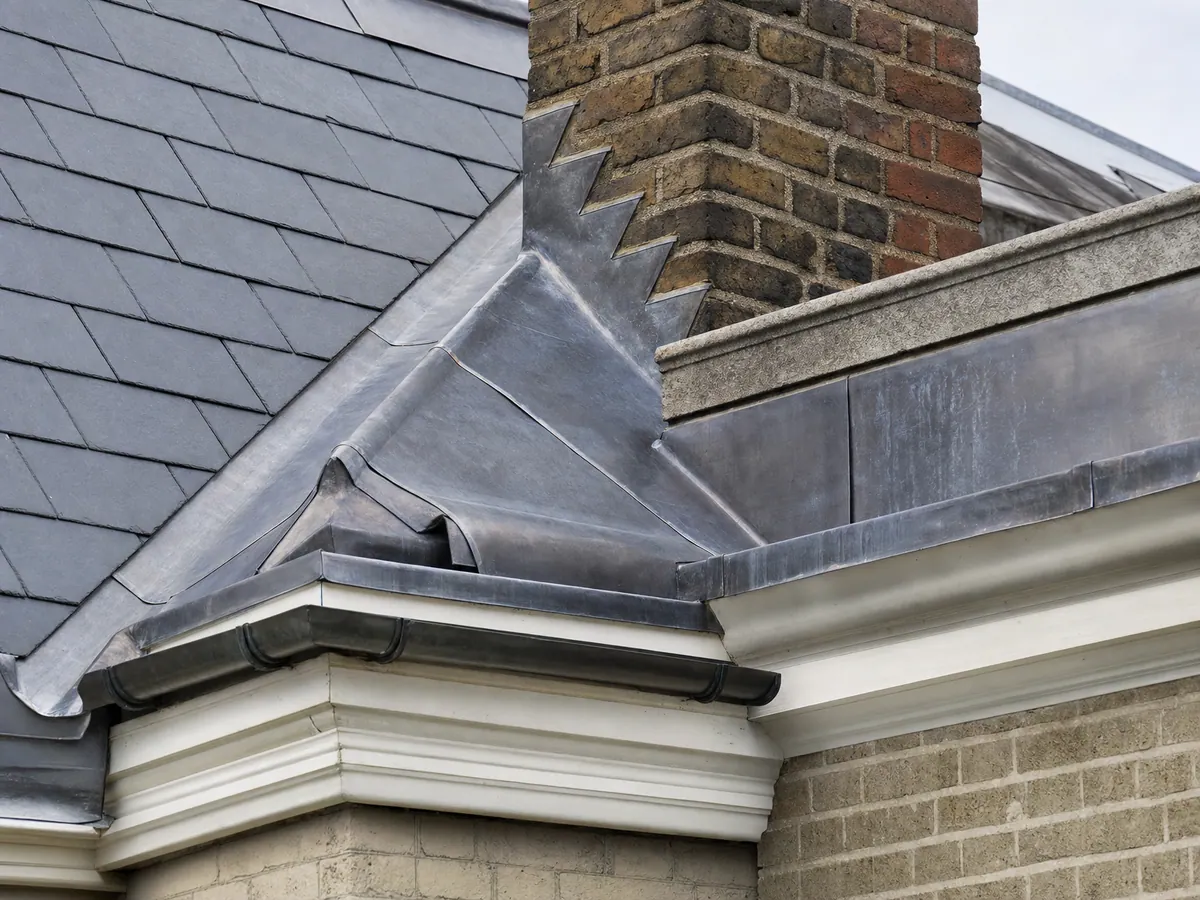
Flashings, valleys, gutters, abutments and roof-edge weathering details.
Above-ground gutters, outlets, hoppers, downpipes and visible overflow risks.
Roofline masonry, flashings, back gutters, parapets and junctions where water can collect.
Visible junctions around rooflights, vents, pipes and other penetrations.
Patches, repeated repairs and older interventions that may need further monitoring.
Maintenance FAQs
Keep the roof priorities visible
Send the property address, roof type, known defects, previous maintenance information, photographs and any access constraints already known.