The short answer
Natural roofing slates vary by source, thickness, size, surface texture, edge, colour range and fixing characteristics. The right slate for a roof depends on more than appearance.
A replacement that looks close from the ground can still be wrong for thickness, lap, pitch, exposure, weight, fixing pattern, coursing or the character of a visible historic elevation.
- Review existing slate before choosing replacement.
- Consider size, thickness and edge as well as colour.
- Check pitch, lap and exposure.
- Base reclaimed and new slate decisions on condition, compatibility and the requirements of the property.
Natural slate characteristics
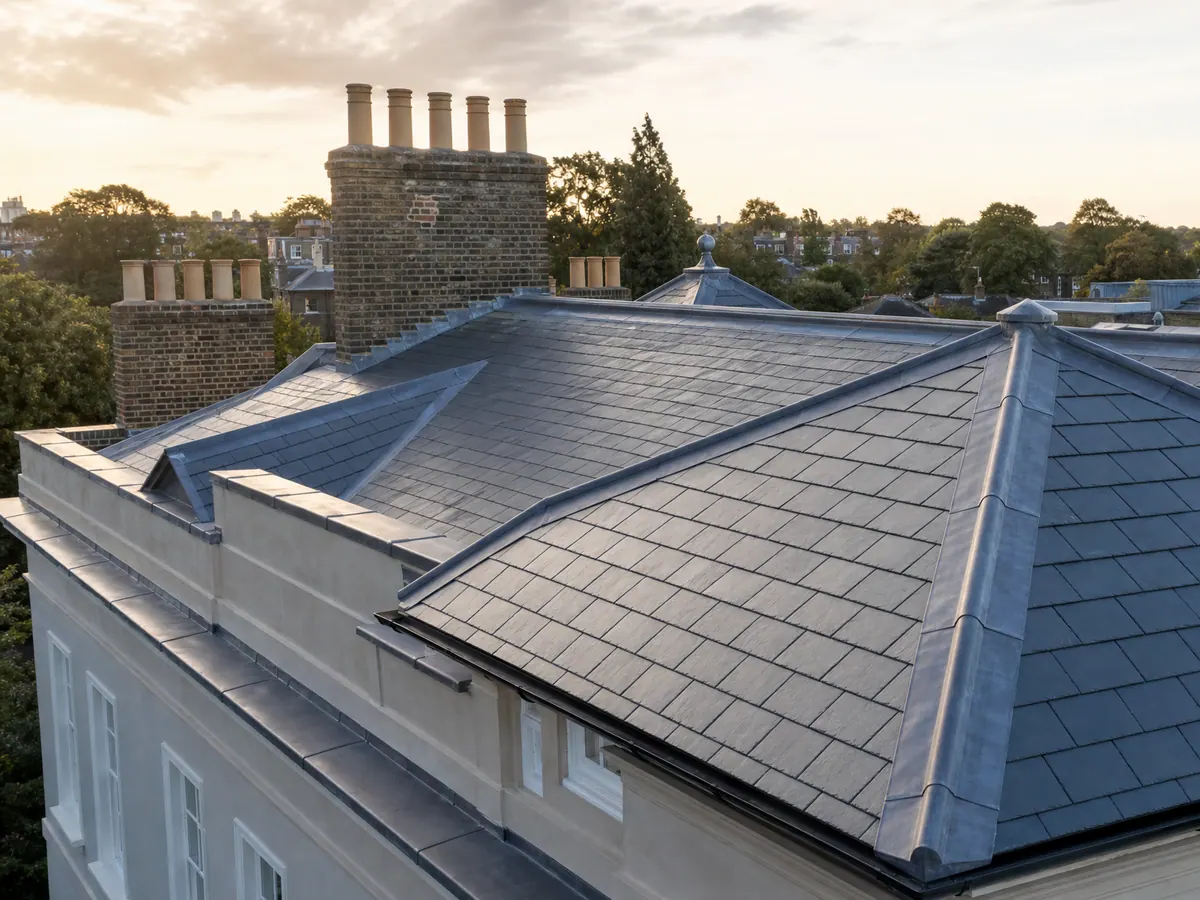
Natural roofing slate is a metamorphic stone split along its cleavage, so source, geology and production affect surface, edge, thickness, colour range and declared performance. ‘Stone slate’ is a different traditional material, typically limestone or sandstone, and should not be treated as another name for natural slate.
Specify the actual product or reclaimed material together with size, thickness range, headlap or gauge, fixing method and the roof details it must meet. Origin or colour alone does not establish suitability; the design must also respond to roof pitch, exposure, rafter length and adjoining ridges, valleys, verges and leadwork.
- Source and geology.
- Thickness and dimensions.
- Surface and edge character.
- Fixing method and lap.
Reclaimed, new and slate-effect products
Reclaimed natural slate can be valuable for matching an older roof, but each batch needs assessment for dimensions, thickness, old nail holes, delamination, breakage, quantity and compatibility. Historic England notes that sound slates can sometimes be reused when an old roof is stripped, but the usable amount should not be promised before sorting.
Slate-effect products are not the same as natural slate. Their use should be considered against appearance, fixing, weight, detailing and the property context.
- Check reclaimed material condition.
- Avoid assuming all reclaimed slate is usable.
- Compare new material against roof geometry.
- Do not describe slate-effect products as natural slate.
Why roof design matters
Slate choice must work with pitch, rafter length, exposure, battens, underlay, ventilation, gutters, valleys, hips, verges, abutments and roof windows or penetrations.
For period, listed or conservation-sensitive homes, retain the existing pattern and significant details where feasible and check consent before changing the covering type, roof profile or prominent features. Historic England specifically advises checking the permissions needed before re-covering an older listed or conservation-area roof.
- Geometry and exposure set technical limits.
- Details must suit the chosen material.
- Visible elevations may need careful matching.
- Approval requirements stay with the proper authority.
Checklist
Slate matching checklist
Use these points before choosing, matching or replacing slate.
- Existing slate photographs
- Slate size if known
- Roof pitch and visible elevations
- Condition of fixings and battens if known
- Reclaimed material availability
- Heritage or conservation context
- Adjacent tile, leadwork and gutter details
- Any professional specification already issued
FAQs
Roofing slate questions
-
No. Size, thickness, surface, edge, fixing, lap, source and roof geometry all matter.
-
Sometimes, but condition, quantity, breakage, old nail holes and compatibility need review.
-
No. They may be suitable in some contexts, but they should not be treated as natural slate.
-
Potentially. Listed and conservation-sensitive properties may need professional and statutory input before material changes.
Next Steps
Discuss slate repair, matching or renewal
Share photographs of the existing roof, known slate type if available, visible elevations and any heritage or planning context before choosing a material path.