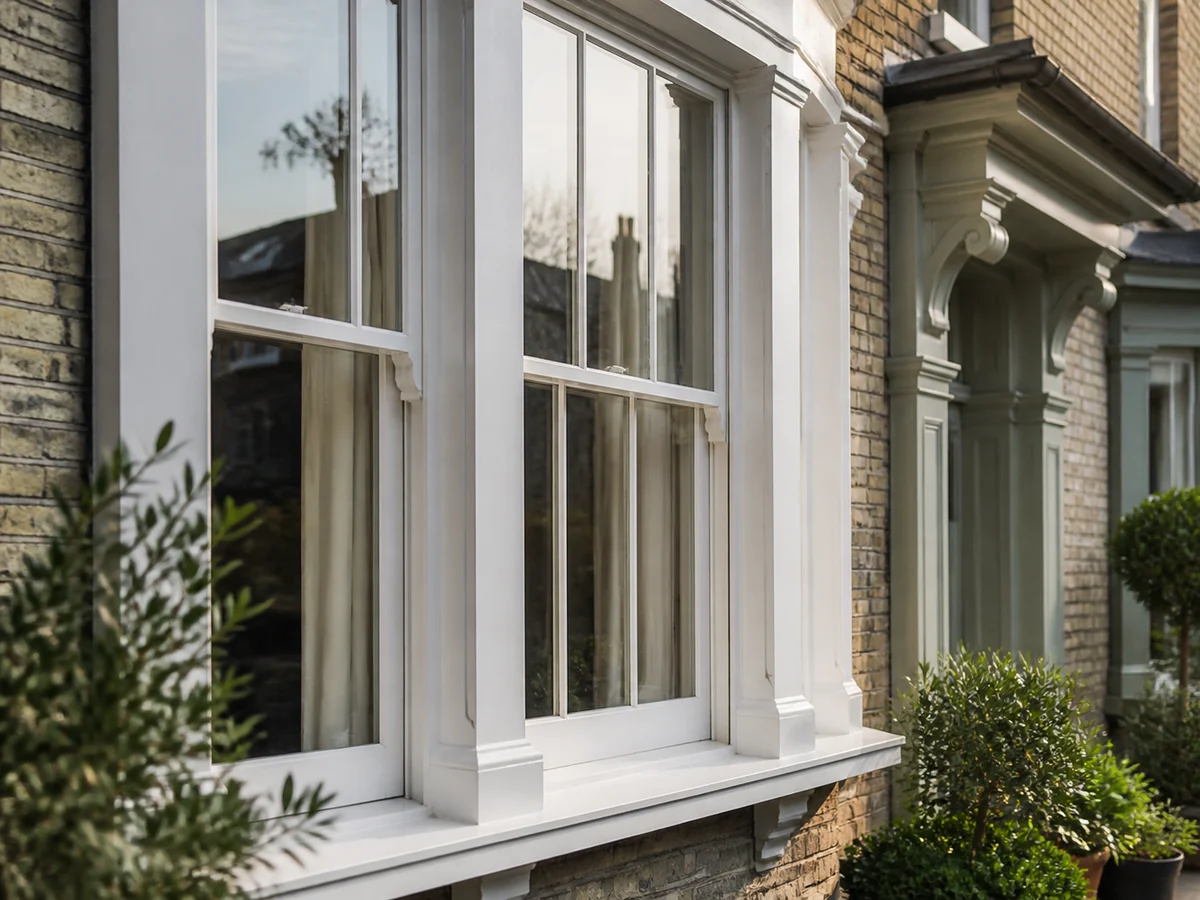
Project at a glance
Taking over a stalled three-room refurbishment and bringing the finishing trades together
The client needed more than a window installer. The outstanding work crossed several trades and had to be completed as one coordinated residential package. ER Group London brought together the bespoke windows, plastering, electrical work and decoration so each room could move from unfinished works to a completed interior without the client having to manage separate contractors.
When window openings, electrical work, plaster and decoration overlap, the quality of the final room depends as much on sequencing and making good as it does on the individual trades.
Property
Private residential refurbishment
Starting point
Earlier work had stalled for six months
Rooms
Three rooms
Window work
Bespoke windows
Interior work
Plastering, electrics and decoration
Programme
Completed in less than three weeks
The starting point
A refurbishment that needed to be picked up and finished properly
The client came to ER Group after an earlier contractor had left a large opening in the ceiling unresolved for six months. By then, the challenge was not simply to complete one isolated item of work. Several parts of the rooms had to be brought together before the interiors could be finished.
ER Group took responsibility for the connected package: bespoke windows across three rooms, plastering and making good, electrical work and final decoration. Keeping those elements within one programme meant the work could be planned around the finished result rather than each trade treating its own task in isolation.
For the homeowner, that meant one team coordinating the outstanding work and moving the rooms towards completion instead of another sequence of disconnected visits.

Bespoke window installation
The window is only one part of the finished opening
Bespoke window work needs to be considered with the surrounding wall, reveals, internal finishes and any nearby services. A well-fitted window can still leave a room looking unfinished if the work around the opening is not planned at the same time.
01 · Opening and fit
Start with the actual building, not a nominal opening size
Bespoke windows are made for a particular opening and property condition. Accurate dimensions, the surrounding fabric and the way the new frame interfaces with the wall all influence how cleanly the installation can be completed.
02 · Weathering and insulation
The perimeter detail matters as much as the frame
External window work needs a continuous, properly resolved junction with the existing building fabric. Depending on the installation, thermal performance, ventilation and weathering requirements can all affect the specification around the opening.
03 · Internal reveals
Making good should be designed into the job
Removing or installing a window can disturb plaster, linings and decorative finishes around the reveal. Planning the making-good work from the outset avoids leaving a technically complete window surrounded by an unfinished room.
04 · Finished appearance
Decoration is the final part of the installation
Once the opening has been made good and the adjoining work is complete, decoration ties the new work back into the room. The objective is for the window and surrounding finishes to read as one completed element rather than a series of separate trades.
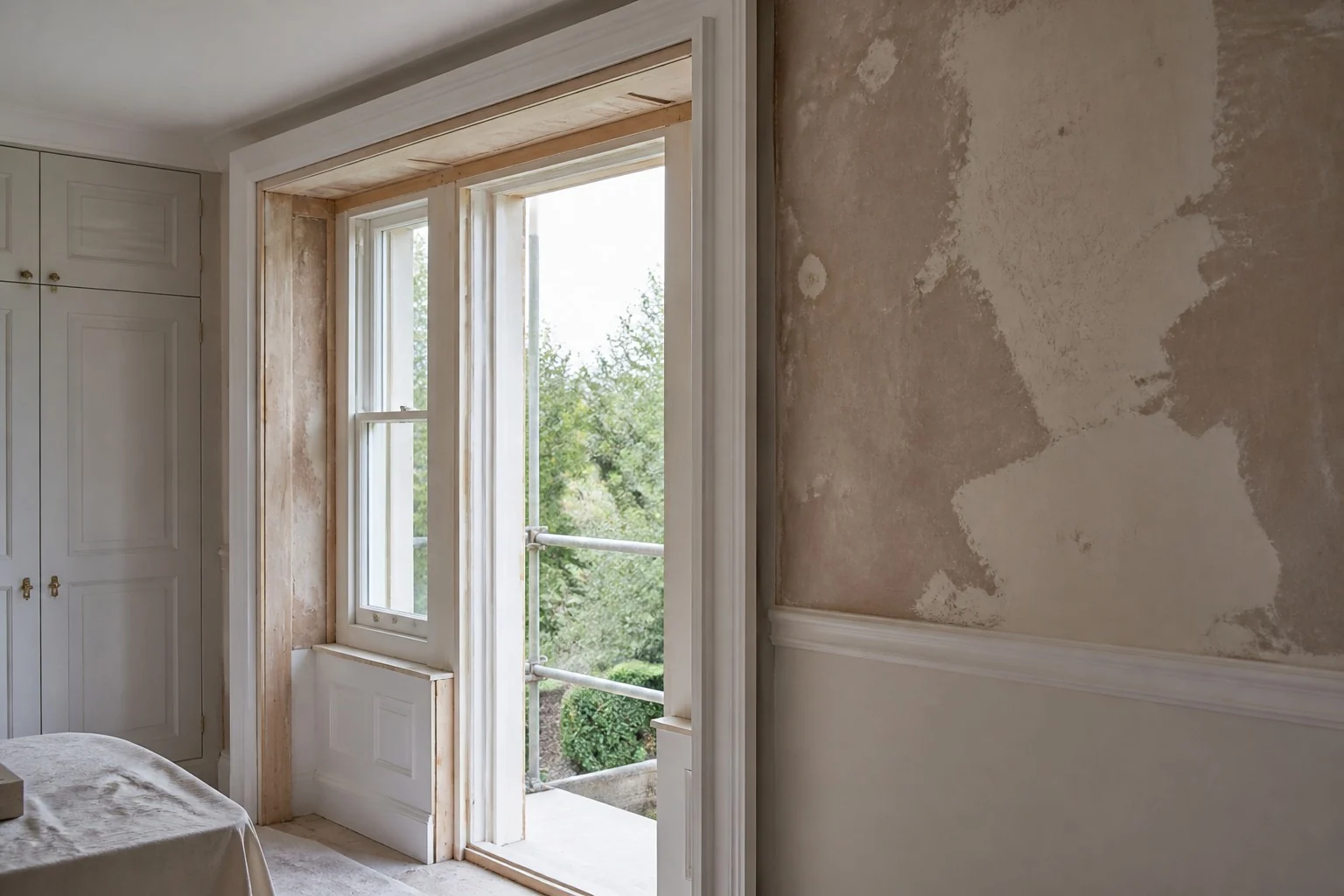
Coordinated refurbishment
Why the trades around the windows needed to be planned together
Window installation, electrical work, plastering and decoration all affect finished surfaces. If they are organised as unrelated packages, newly completed plaster can be reopened for cables, decoration can be damaged by later making-good and a room can spend longer than necessary moving backwards and forwards between trades.
On this project, ER Group coordinated the work across all three rooms within one refurbishment programme. That allowed the team to deal with the bespoke windows and the associated interior work as connected parts of the same job.
The benefit to the homeowner was straightforward: fewer interfaces to manage personally and a clearer route from unfinished work to completed rooms.
Trade sequencing
Getting the order right protects finished work
The exact sequence depends on the property and the scope, but the principle is consistent: work that opens up walls or affects services should be resolved before final plastering and decoration wherever practical.
01
Prepare the openings
Assess the existing opening, protect the room and establish what needs to be removed, retained or made good around the new window work.
02
Coordinate services
Any electrical work affecting the rooms should be resolved before surfaces are finally closed and decorated, reducing avoidable disturbance later.
03
Plaster and make good
Reinstate disturbed surfaces around the openings and other work areas so the room has a sound, consistent base for the final finish.
04
Decorate and finish
Complete the decorative finishes once the adjoining construction and service work is ready, leaving the room visually complete rather than partially reinstated.
Electrical and interior interfaces
Electrical work should be resolved before the final surfaces are closed
Where electrical alterations form part of a refurbishment, they need to be considered before plastering and decoration are treated as finished. Cable routes, accessories and any work concealed within walls can otherwise force completed surfaces to be opened again.
Domestic electrical work also needs to be appropriate to the scope and carried out with the relevant safety and Building Regulations requirements in mind. For the homeowner, the important practical point is that electrical work should be integrated into the refurbishment rather than added after the room has been finished.
On this three-room project, the electrical work formed part of the same coordinated package as the bespoke windows, plastering and decoration.

Plastering and decoration
Making good turns installation work back into a finished room
Plastering and decoration are sometimes treated as secondary to the main construction work, but around new windows they are fundamental to the finished result. Reveals, ceiling edges and adjoining surfaces need to be made good cleanly so the new work sits naturally within the existing room.
Good sequencing is especially important when a project has already been disrupted. Plastering too early can lead to avoidable damage from later service work; decorating before the underlying surfaces are ready can produce an inconsistent finish and unnecessary rework.
ER Group completed these finishing trades as part of the same package, so the client received completed rooms rather than window installation followed by another search for separate plasterers, electricians and decorators.
Why coordinated making good matters
- Window openings are finished back into the room.
- Electrical work can be resolved before final decoration.
- Plaster repairs are completed in the correct sequence.
- Decorators receive properly prepared surfaces.
- The homeowner has one programme rather than several disconnected trades.
Project delivery
From six months of stalled work to completion in less than three weeks
The client had already lived with an unresolved ceiling opening for six months before ER Group became involved. Once the outstanding work was brought into one coordinated programme, the bespoke windows, plastering, electrical work and decoration across the three rooms were completed in less than three weeks.
One point of coordination
The client did not have to sequence separate window, electrical, plastering and decorating contractors around one another.
Three rooms progressed together
The work was treated as one connected residential programme rather than three isolated room repairs.
Finish carried through
The scope continued through making good and decoration, giving the client completed interiors rather than stopping at installation.
Customer feedback
“Faultless from start to finish”
We’re really happy with the work and turn around from ER Group. We used a cheaper and less experienced roofing company initially that left us with a huge hole in our ceiling for 6 months. Jack and the team were able to install, plaster, sort electrics and decorate bespoke windows in three rooms in less than 3 weeks. The work has been faultless from start to finish, I’d highly recommend ER Group.
The result
Three rooms brought back to a finished standard under one coordinated programme
ER Group took over a refurbishment that had stalled and completed the connected window and interior work across three rooms. Bespoke windows, plastering, electrical work and decoration were handled as one package rather than leaving the client to coordinate the remaining trades individually.
The client recorded a turnaround of less than three weeks and described the work as faultless from start to finish — a strong example of why joined-up delivery matters when a residential project crosses several trades.