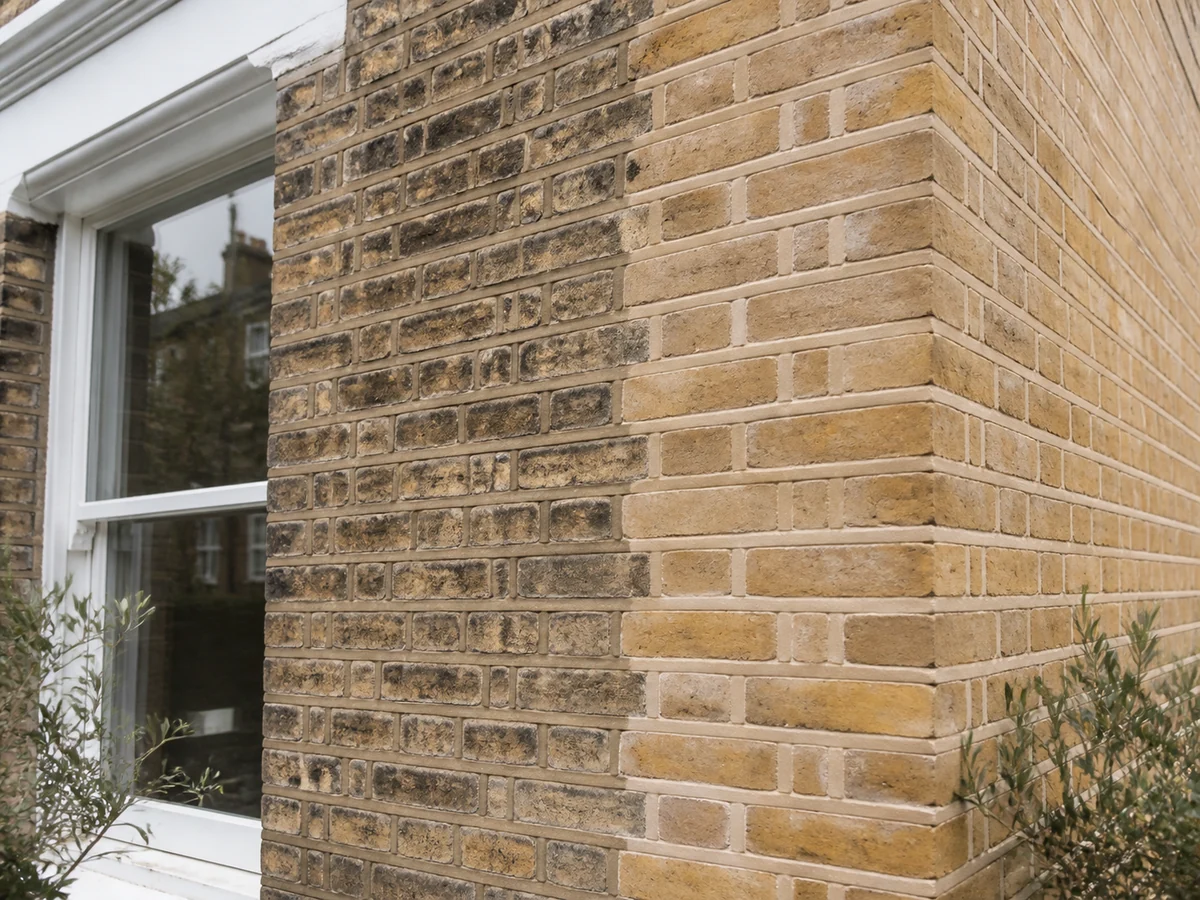
Project at a glance
Repointing the whole front elevation rather than treating isolated joints
The project covered the full front of the house. That matters visually as well as technically: repointing an entire elevation allows the joints to be approached consistently across the facade, rather than leaving a patchwork of old and new mortar finishes across the most visible face of the property.
Good repointing should support the masonry, manage weathering and sit comfortably with the brickwork. The finished appearance comes from the relationship between mortar colour, texture, joint profile and the bricks themselves.
Property
Private residential home
Project
Front-elevation repointing
Scope
Full front of the house
Primary focus
Masonry joints and exterior finish
Finished appearance
Consistent across the elevation
Customer feedback
Five-star Google review
Why repointing matters
Mortar joints are part of the weathering system of the wall
Repointing is often noticed because it changes the appearance of a facade, but its first job is to maintain the joints between the masonry units. Those joints help the wall manage rain, movement and the gradual weathering that takes place over time.
When mortar has deteriorated sufficiently, renewing the joints can help protect the surrounding masonry and restore a more consistent external finish. The work needs to be appropriate to the brick or stone, because mortar that is too hard, too dense or badly profiled can transfer stress and moisture into the masonry instead of performing as the more sacrificial part of the wall.
On this project, ER Group repointed the full front of the house, treating the elevation as one complete area rather than a collection of unrelated local repairs.
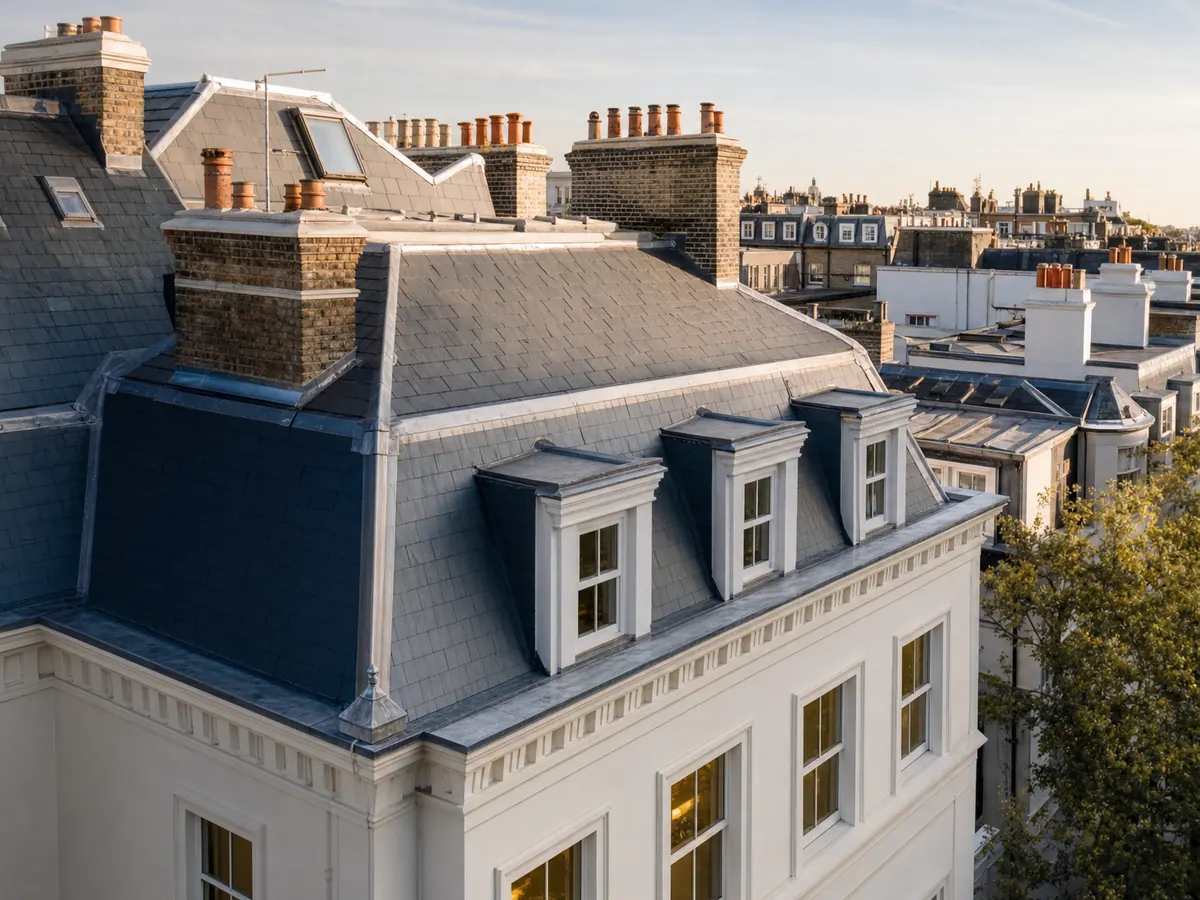
Assessing the masonry
The mortar should suit the wall it is repairing
There is no single mortar specification that is correct for every house. Before repointing, the existing masonry, remaining mortar, exposure and joint character should be considered so the replacement is compatible with the wall rather than simply chosen for maximum hardness.
01 · Existing masonry
Start with the brick or stone already on the building
The condition, strength and porosity of the masonry influence the mortar that should sit between it. A compatible joint is intended to weather appropriately without becoming the hardest, least permeable element in the wall.
02 · Existing mortar
Colour and texture matter as well as strength
Where suitable original or earlier sound mortar remains, it provides useful information about the character of the elevation. Aggregate, colour, texture and joint finish all contribute to how the repointed facade will look when complete.
03 · Older buildings
Hard cement-rich pointing can be unsuitable for softer historic masonry
On many older buildings, a more permeable lime-based mortar is appropriate because it allows the joint to weather sacrificially rather than forcing moisture and frost action into softer bricks or stone. The correct mix still depends on the individual wall and its exposure.
04 · Joint profile
The way the joint is finished changes the appearance of the elevation
Flush, near-flush, weathered, tuck and other joint finishes create very different visual effects and can behave differently in exposed weather. Where a property has an established joint character, the new work should respond to it rather than introducing an arbitrary modern finish.
Preparing the joints
Good repointing starts before the new mortar goes in
The durability and appearance of repointing depend heavily on preparation. Deteriorated mortar needs to be removed carefully enough to provide a sound joint for the replacement material without damaging the edges of the surrounding bricks or stone.
The joints also need to be clean and prepared so the new mortar can bond properly. Simply smearing a thin layer over the face of an old joint may improve the appearance briefly, but it does not provide the same depth or key as properly prepared repointing.
On a front elevation, that preparation is repeated across a large number of joints. Consistency of depth, cleaning and workmanship therefore has a direct effect on how uniform the finished facade appears.
Whole-elevation workmanship
A full front elevation needs a consistent approach from one area to the next
When the whole facade is being repointed, small variations become highly visible. Mortar colour, joint fullness, tooling and drying conditions all contribute to whether the elevation reads as one coherent piece of work.
01
Prepare consistently
Rake out deteriorated joints carefully and avoid unnecessary damage to brick edges or sound surrounding masonry.
02
Use a compatible mortar
Choose the mortar to suit the masonry, existing construction and exposure rather than simply specifying the strongest available mix.
03
Control the joint finish
Keep the profile, fullness and tooling consistent so the front elevation reads as one completed facade rather than a series of separate patches.
04
Protect the new work
Fresh pointing needs appropriate protection from heavy rain, frost and excessively rapid drying while the mortar develops its initial set.
Weather and curing
Fresh mortar needs time and suitable conditions to cure
Repointing is exposed to the weather from the moment it is placed. Strong sun and wind can dry fresh mortar too quickly, while heavy rain or frost can damage new work before it has developed sufficient strength.
That makes protection part of the workmanship. Depending on the mortar and conditions, the newly pointed elevation may need to be shielded and managed so moisture is not lost too quickly and rain is not driven into fresh joints.
The purpose is not simply to keep the wall looking clean while work is underway. Controlled curing helps the new joints develop properly and reduces the risk of premature cracking, powdering or inconsistent colour across the elevation.
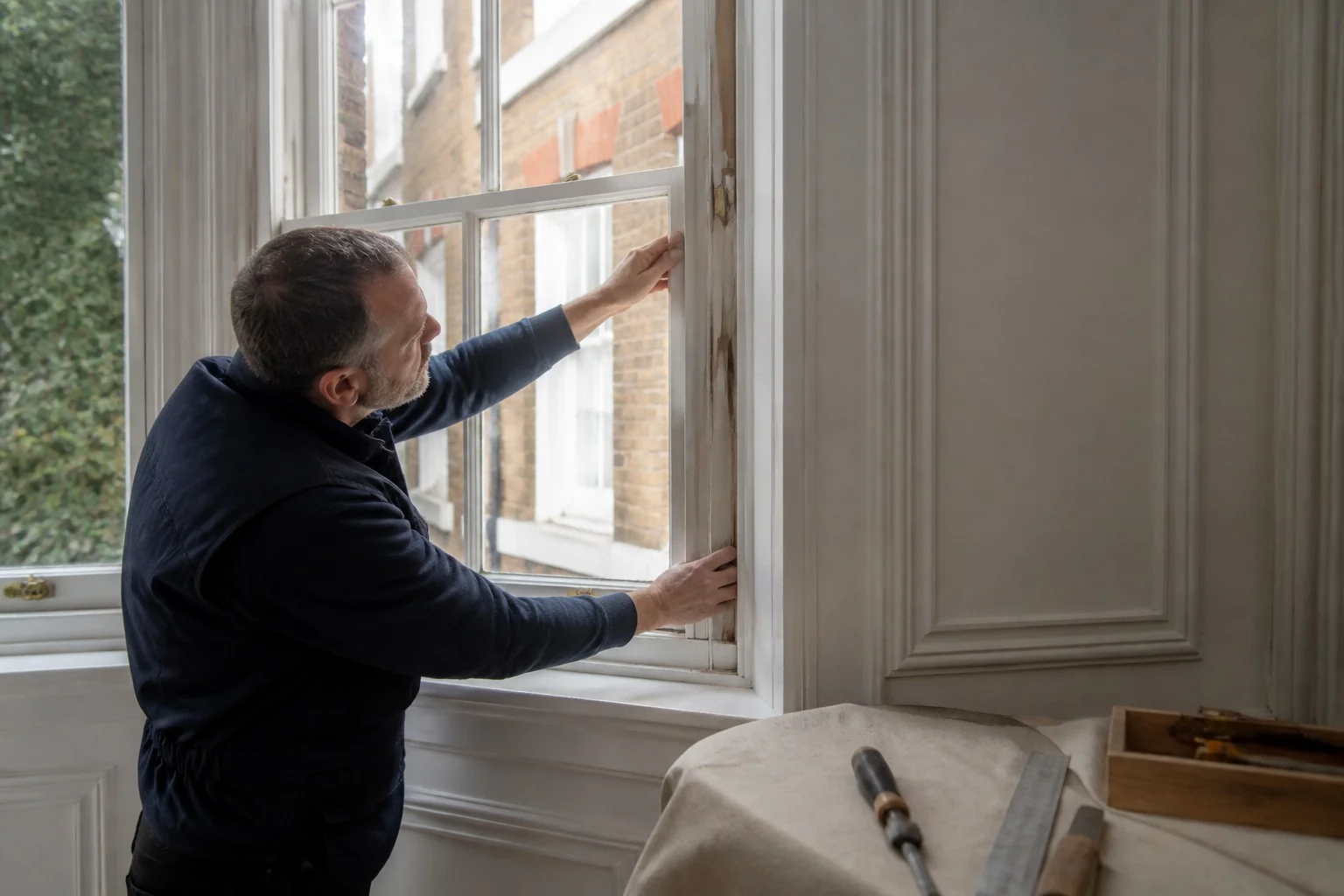
Appearance and protection
The finished facade depends on more than choosing the right mortar colour
A newly repointed elevation can transform the appearance of a house because the mortar joints form a visible grid across the entire facade. If those joints vary significantly in depth, colour or profile, the differences can dominate the brickwork rather than complement it.
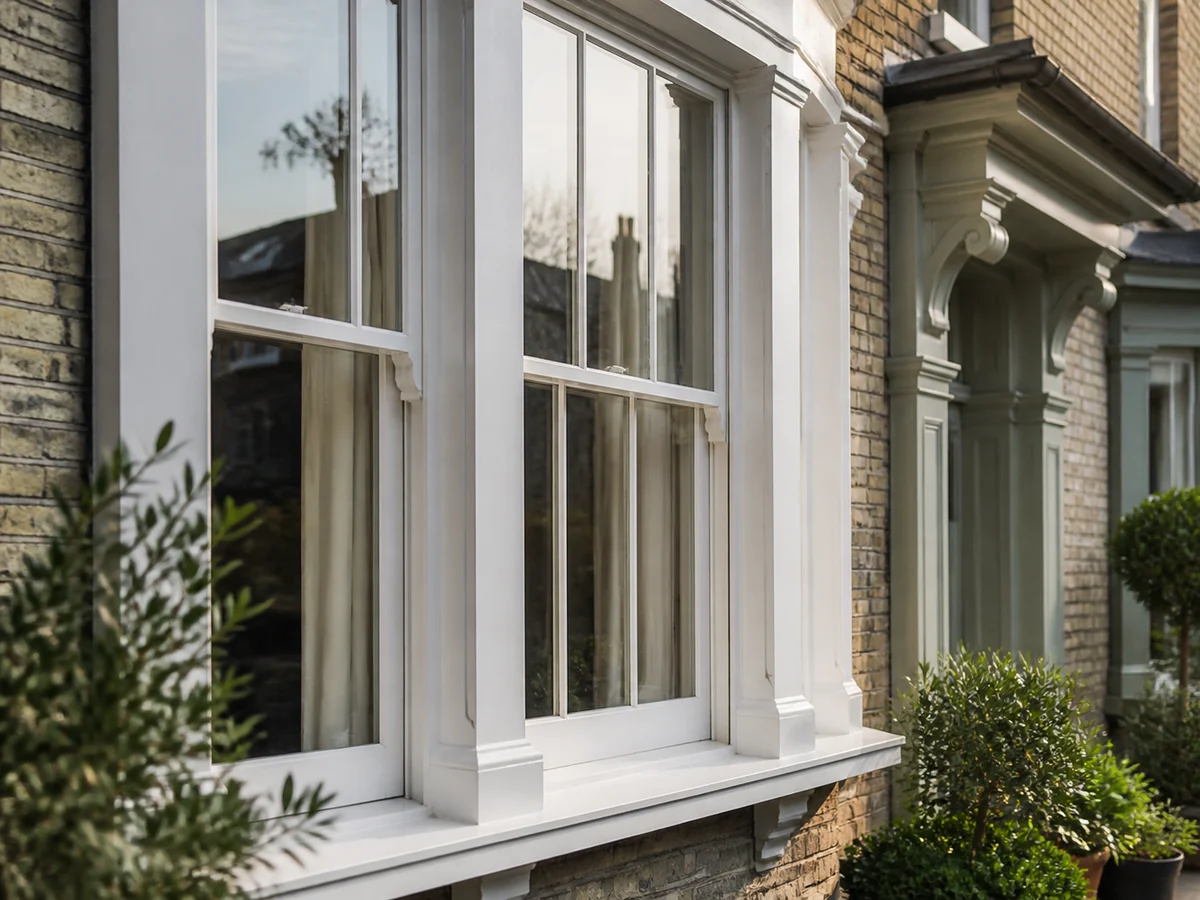
Careful preparation, consistent joint finishing and protection of adjacent surfaces all help the new work sit naturally within the elevation. Windows, sills, doors, decorative elements and paving below the work area also need to be considered while old mortar is removed and new mortar is applied.
For a private home, the objective is both practical and visual: renew deteriorated joints without creating unnecessary damage, and leave the front of the property looking coherent once the work is finished.
Key quality points
- Protect brick and stone edges while joints are prepared.
- Match mortar properties to the existing masonry.
- Keep colour, texture and joint profile consistent.
- Protect adjacent windows, doors and finished surfaces.
- Allow the new pointing to cure under suitable weather protection.
When a whole elevation is being considered
Not every wall needs complete repointing
The right scope depends on the condition of the existing joints. Sound mortar does not normally need to be removed simply to make everything look new, particularly on older buildings where historic material can be significant.
Localised deterioration may justify localised work, while widespread failure or a facade with consistently poor joints may make a larger section or full elevation the more coherent repair. Rainwater defects, leaking gutters and other sources of persistent saturation should also be dealt with rather than repointing the symptoms alone.
Where a building is listed, in a conservation area or has distinctive historic pointing, the existing joint style and any consent requirements should be considered before work starts. Specialist finishes such as tuck pointing should not be replaced with a generic joint simply because it is quicker to apply.
On this project, the chosen scope covered the full front of the house, allowing the completed elevation to be treated consistently from one side to the other.
Customer feedback
“The house looks amazing now”
We had all of our front house repointed. We are very pleased with the works carried out. The house looks amazing now. They are some of the few companies that we trust when it comes to home refurbishment. Highly recommended.
The result
A renewed front elevation with a consistent completed appearance
ER Group completed the repointing across the full front of the house, renewing the visible joints as one coordinated exterior refurbishment rather than a series of disconnected patches.
The homeowner was very pleased with the completed work, described the house as looking amazing afterwards and identified ER Group as one of the few companies they trust for home refurbishment.